Kategorie: Uncategorized

  • Primary aromatic amines (PAA) – New discussions on the detection limit

    Primary aromatic amines (PAA) – New discussions on the detection limit

    Origin and risks

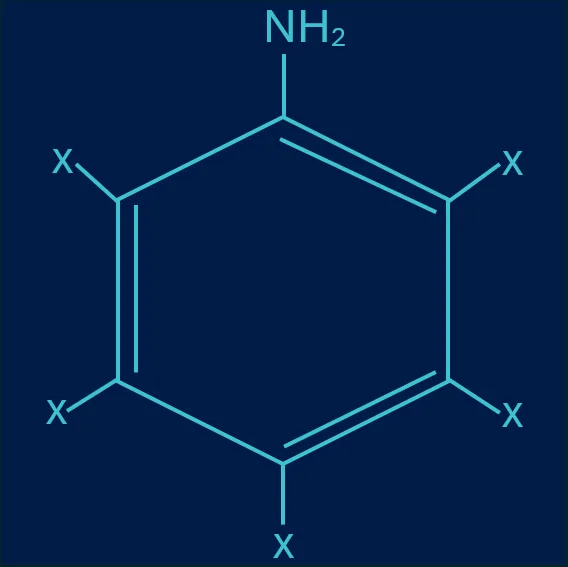
    Primary aromatic amines often occur as impurities or degradation products in dyes (e.g. azo pigments). They can also be formed by hydrolysis from isocyanates in polyurethane adhesives or other PU systems. Some PAAs are considered carcinogenic or mutagenic, which is why their migration into food is problematic.

    Measurement / Analysis

    3% acetic acid or water is often used as a simulant for migration testing. Recent studies show that some paA are unstable in acetic acid under standard conditions, while they remain more stable in water. However, the influence of the simulant on protonation (relevant, for example, in paA from laminating adhesives) has often not yet been sufficiently researched.

    Liquid chromatography is usually used to analyse the migrants:

    • High-performance liquid chromatography with diode array detector (HPLC-DAD)
    • High-performance liquid chromatography coupled with tandem mass spectrometry (HPLC-MS/MS)

    The photometric summation method (Section 64 LFGB, method L 00.00-6) is still used in some areas of industry, but it can only be used to provide a rough estimate of compliance with the sum limit of 0.01 mg/kg and is not suitable for conformity testing because it does not provide sufficient recovery for all possible amines.

    Regulatory requirements and assessments

    Various regulations (e.g. Plastics Regulation, Commodities Regulation and BfR recommendations) contain similar provisions:

    • Primary aromatic amines that are considered carcinogenic (CLP category 1A/1B) must be undetectable if no specific migration limit (SML) exists.
    • According to Article 11(4) of the Plastics Regulation (EU) No 10/2011, a detection limit of 0.002 mg/kg per individual substance applies to such paA.
    • The sum of unlisted and non-carcinogenic paA must not exceed 0.01 mg/kg.

    The BfR recommends applying the ALARA principle (As Low As Reasonably Achievable).

    Planned adjustment & discussion

    The minutes of the 34th meeting of the BfR Commission for Commodities document that the BfR plans to include a new footnote in its recommendations: For carcinogenic paA, a transition above 0.15 µg/kg food should not be detectable. At the same time, the maximum permissible detection limit is to remain at 2 µg/kg food.

    It follows that measured values above 0.15 µg/kg would be considered unacceptable/non-compliant.

    The reason given is that some laboratories can achieve detection limits lower than the current detection limit of 2 ppb. The handling of measurement uncertainty, analytical implementations and, if necessary, gradual approximations to the target value of 0.15 µg/kg food must be examined and implemented in detailed concepts.

    If you have any questions, please contact fcm@innoform.de. We will be happy to provide you with a quote for the determination of primary aromatic amines.

    You can find examinations on paA here.

    An article by Heike Schwertke
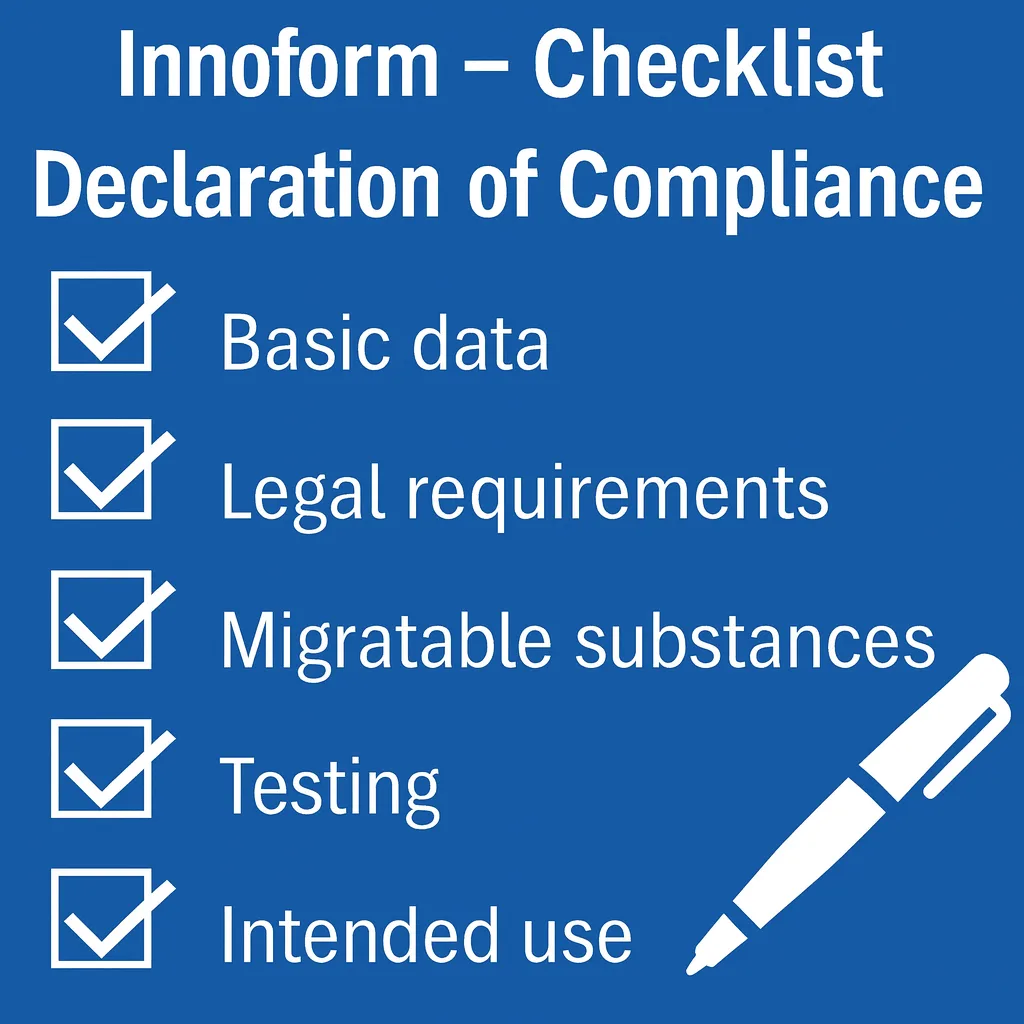
  • Declaration of Conformity Checklist

    Declaration of Conformity Checklist

    How to ensure that your food contact materials comply with EU regulations

    The declaration of conformity is a key document that confirms that a product meets the EU’s basic requirements for materials that come into contact with food. But how can you ensure that the information it contains is complete, accurate and up to date?

    Compliance with EU requirements – in particular Regulation (EU) No. 10/2011 – can only be guaranteed if relevant information is exchanged transparently between suppliers and customers throughout the entire supply chain. The information provided must be clear and precise and refer to the actual composition of the material. This is precisely where our revised checklist for declarations of conformity comes into play.

    What is new?

    Following the 19th amendment to Regulation (EU) No 10/2011 by Regulation (EU) 2025/351, we have comprehensively updated our checklist for reviewing declarations of conformity. It helps you to systematically check your documentation for completeness and compliance with Annex IV of the Regulation. The information must be clear and precise and refer to the actual composition of the material.

    What does the checklist offer?

    • A structured overview of all required information in accordance with Annex IV
    • Additional notes on conformity assessment
    • Support in identifying gaps or delegated tasks
    • A new section for reviewing information on bisphenol A in accordance with Regulation (EU) 2024/3190

    This checklist for declarations of conformity provides you with a practical tool for efficiently reviewing your declarations of conformity and taking any necessary measures.

    You can request the checklist free of charge at fcm@innoform.de.

    The template is available in German and English – please indicate your preferred language when submitting your inquiry.

  • Sensory Tests for Flexpack

    Sensory Tests for Flexpack

    That tastes kind of funny …

    Everyone has probably experienced it before. Water that has been sitting in a plastic bottle in a warm car for a while has a strange taste. This or something similar could be the description of a consumer who is not familiar with the sensory testing of food contact materials (FCM, food contact materials). And that’s exactly what we test in our test service in Oldenburg, so that even in a warm car, water has no off-taste.

    Sensory testing for assessing compliance with legal requirements for food packaging

    At EU level, Regulation (EC) No 1935/2004 (“Framework Regulation”) stipulates that food contact materials (such as flexible packaging, coatings, closures, kitchen utensils, etc.) must be manufactured in such a way that they do not adversely affect the organoleptic properties (taste, but also smell and appearance) of food (Article 3c of the Regulation). This means that in addition to migration testing of the respective material, sensory testing is also necessary to detect any odor or taste deviations. Even when legal migration limits are met, e.g. according to Regulation (EU) 10/2011 (Plastics Regulation), a food can become unusable for the consumer due to off-taste/odor.

    Causes of such deviations can be, for example, impurities and/or degradation products of the raw materials used for the manufacture of the material or contaminations from the manufacturing process, which then transfer to food in contact with it and negatively affect the smell and/or taste.

    Test persons

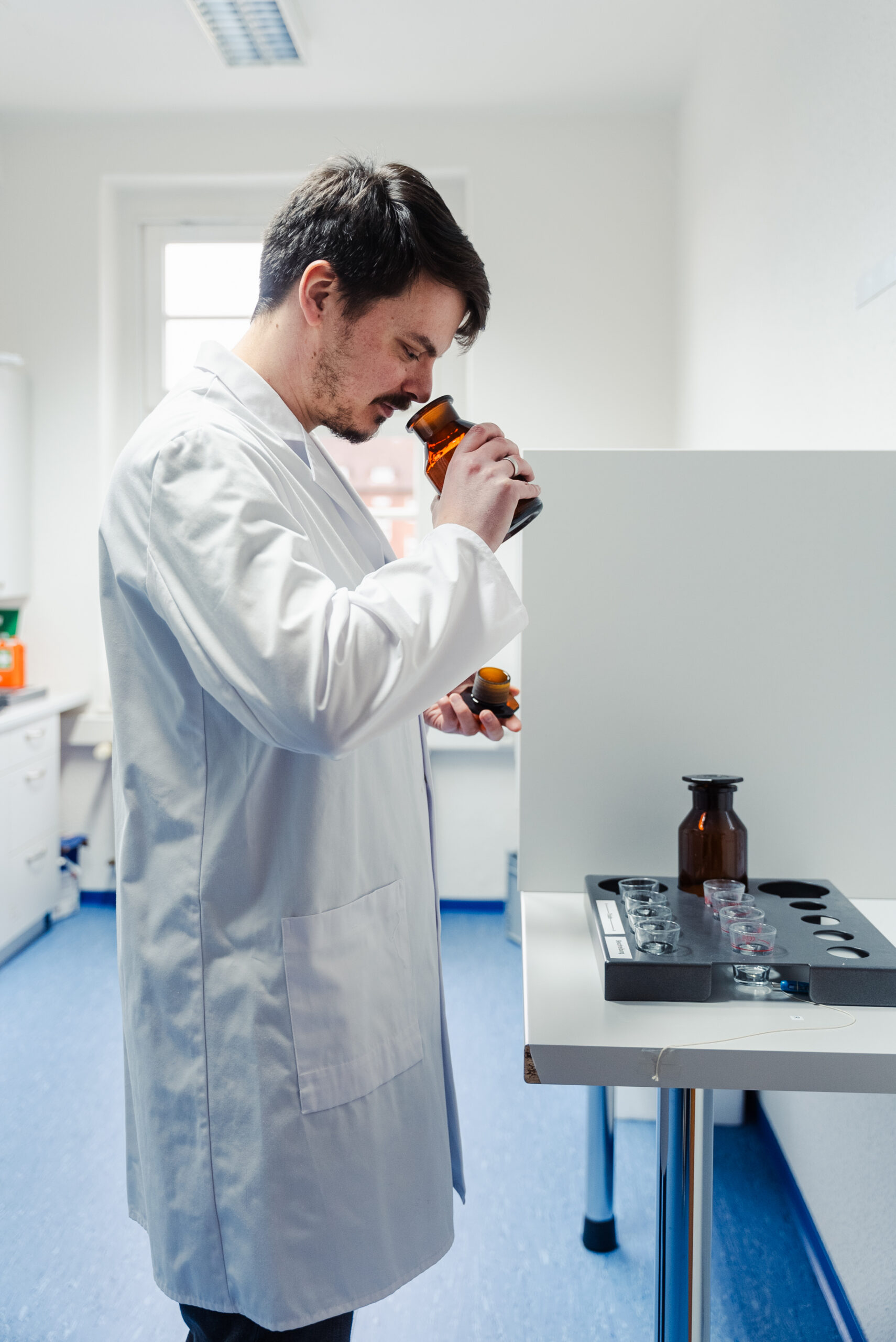
    At Innoform, the sensory assessment of food contact materials is generally carried out according to DIN 10955. The test is performed by trained test persons, the so-called test panel. This consists of at least six selected testers with the task of achieving at least six results that are consistent with each other. The test persons must be trained in determining sensory deviations (visual, orthonasal, gustatory, retronasal, trigeminal stimuli, etc.) that can be caused by food contact materials. For example, it is regularly checked whether the corresponding basic tastes (sweet, sour, salty, bitter, umami) are recognized and sufficient sensitivity (stimulus threshold, recognition threshold) is present.

    The great advantage of human taste/smell is its sensitive perception. Where measuring devices reach their analytical limits, humans can still perceive even the smallest amounts of odor- or taste-active substances.

    An image containing indoors, wall, person, clothing.

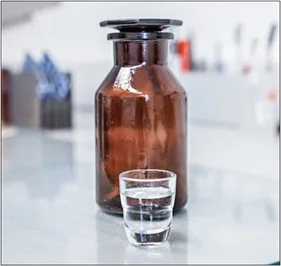
AI-generated content may be inaccurate.An image containing indoors, solution, table, bottle.

AI-generated content may be inaccurate.

    Odor testing

    The odor emission of food contact materials (the inherent odor) is not legally regulated and is therefore not mandatory for compliance testing of the material. However, the customer is often the strictest tester, so a noticeable odor can be reason enough not to buy or reject a product or material. Testing for inherent odor can therefore be very useful, e.g. in quality assurance (incoming goods inspection) or in the development of new materials.

    Odor testing is carried out using odor-neutral, sealable glass containers into which the sample material is placed and stored according to the requirements of the standard. Subsequently, the sample containers are smelled and the detected odor is evaluated using an intensity scale from 0 to 4. From a score of 2 (weak deviation, definable), a description of the odor (e.g. bitter almond, burnt, etc.) is also given.

    Taste testing

    For testing the transfer of sensorially perceptible substances to a test food (e.g. water, but also butter cookies, chocolate, fat, etc.), the samples are brought into contact (incubated) with the test food in a suitable manner under defined conditions (temperature/time) and then compared with a reference sample (test food without sample contact).

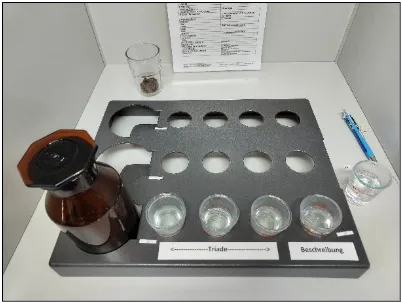
    The test is carried out as a so-called coded triangle test, combined with a Difference from Control Test (DfC test) and a simple descriptive test. In a first step, each test person receives three sample glasses (so-called triad), which contain the actual sample and the reference sample. This determines whether a significant difference between sample and reference sample can be detected. Subsequently, the sample is assessed in comparison to the reference using an intensity scale from 0 (no deviation detectable) to four (strong deviation) (DfC test); from a score of 2 (weak deviation), a description of the taste is also given (e.g. sweetish, bitter, etc.).

    Assessment scale:

    Score 0 = no perceptible taste deviation

    Score 1 = just perceptible (still difficult to define) taste deviation

    Score 2 = weak taste deviation

    Score 3 = clear taste deviation

    Score 4 = strong taste deviation

    Evaluation of sensory testing

    For the evaluation according to DIN 10955, the results of at least six test persons are required. If there are large deviations from each other, individual results can be deleted if the test panel is of a certain size; if this is not possible, the test must be repeated if necessary. The final result is then calculated as the median of all usable results.


    According to the 63rd communication of the Federal Institute for Risk Assessment (BfR), the following assessment values are used as recommendations to evaluate from which intensity of deviation or ‘off-taste’ a food is considered “impaired”:

    • when testing with original food under typical contact conditions ≥ 2.0 (reaching the recognition threshold)
    • when testing with test food under standardized test conditions ≥ 3.0 (clear deviation).

    From a score of 3 according to this method, the test should be repeated with the actual intended food under application conditions. From a score of 2 (weak sensory deviation), the cause of the deviation should be determined.

    If you have any questions, please contact fcm@innoform.de. We will be happy to prepare a quote for the sensory testing of your material. Or inform yourself online and use our online ordering service.

  • Plastics in paper packaging

    Plastics in paper packaging

    Part 2: Important coating polymers

    In the first part of our series on plastic content in paper-based packaging for food and consumer goods, we focused on the reasons for using plastic layers and typical functional requirements – without going into specific types of polymers. In part 2, we now turn our attention to individual, sometimes specialised plastic materials and plastic substitutes that are used specifically to achieve certain functional properties. We look not only at conventional plastics, but also at bio-based and alternative materials that are important in terms of barrier effect, sealability and surface protection, as well as from an environmental and regulatory perspective. Our focus is on plastics in paper packaging: from PE to bio-based polyesters – an overview of functions, environmental aspects and regulatory requirements.

    Polyethylene (PE) 

    Polyethylene is the plastic most commonly used in paper-based packaging, usually applied as a thin coating on cardboard or paper. It primarily serves as a moisture and grease barrier, ensuring that liquids or oils do not penetrate the paper fibres. At the same time, PE’s thermoplastic properties enable reliable sealability, which is particularly important for bags, cups and food cartons. PE is chemically inert, food-safe and relatively inexpensive, which explains its widespread use. From an environmental point of view, however, it is problematic because it can only be separated from the fibre material in paper recycling through complex processes and remains persistent in nature. More recycling-friendly variants, such as thinner coatings or modified PE types, are currently being developed to improve the recyclability of paper-PE composites.

    Styrene acrylate copolymers 

    Styrene acrylate copolymers combine the properties of styrene and acrylic acid esters. In paper-based packaging, they are primarily used as binders in barrier or protective coatings, where they provide adhesion, mechanical stability and water resistance. They are also found in certain adhesives and printing inks, where they contribute to a robust, durable surface.

    Acrylate polymers 

    Acrylate polymers (pure acrylates) are frequently used in adhesives for labels and packaging tapes. They are characterised by strong adhesion, UV and moisture resistance, and temperature stability. In addition to adhesives, acrylates are also used as transparent coatings on films or paper to improve barrier properties against gases and aromas without compromising printability or optical quality.

    Polysiloxanes

    Polysiloxanes, also known as silicones, are primarily used in packaging as ultra-thin coatings or additives. For example, they serve as a non-stick or release layer on paper substrates, such as label backing papers, so that adhesive surfaces can be easily removed. When added in small quantities, polysiloxanes also improve the processability and lubricity of coatings, such as in the coating of paper. Due to their temperature and chemical resistance, they are suitable for many food contact applications.

    Polyhydroxybutyrate (PHB) 

    PHB belongs to the family of bio-based polyhydroxyalkanoates (PHA) and is produced by microorganisms from renewable raw materials. It is completely biodegradable and can replace polypropylene in certain applications. PHB is rigid, dimensionally stable and suitable for direct food contact, but it is more brittle and heat-sensitive than many conventional plastics. In paper composites, it can serve as a coating or film layer, especially in compostable disposable packaging.

    Bio-based polyesters 

    Bio-based polyesters comprise a range of materials that are made entirely or partially from renewable raw materials. A well-known example is polylactic acid (PLA), which is compostable under industrial conditions and is used in the form of films, trays or paper coatings. Other bio-based polyesters include PEF, which can replace PET, and PBS or PBAT, which are used for compostable films and bags. These materials offer potential for reducing fossil raw materials, but face challenges such as limited heat resistance or limited recycling infrastructure.

    Conclusion 

    The materials presented, which are not an exhaustive list, complement the range of functional plastics in paper-based packaging and demonstrate the wide variety of options available for achieving specific properties such as barrier effect, sealability or surface protection. Their choice depends heavily on technical requirements, regulatory compliance and environmental goals – an area that is likely to become even more dynamic in the coming years.

    Coating Properties Production volume (rough estimate)
    Polyethylene (PE) Moisture and grease barrier, thermoplastic, food-safe, cost-effective6 million tonnes
    Styrol-Acrylat-Copolymers Adhesion, mechanical stability, water resistance, in adhesives and printing inks1.5 million tonnes
    AcrylatpolymersStrong adhesion, UV and moisture resistance, temperature stability2 million tonnes
    Polysiloxanes Non-stick or release coating, temperature and chemical resistance500,000 tonnes
    Polyhydroxybutyrate (PHB) Biodegradable, rigid, dimensionally stable, suitable for food contact 200,000 tonnes
    Bio-based polyesters Compostable, reduction in fossil raw materials, limited heat resistance300,000 tonnes

    List of sources for research on the various coatings used on paper:

    1. Packoi. “PE Coated Paper.” Access on 3 September 2025. [https://packoi.com/de/blog/pe-coated-paper/](https://packoi.com/de/blog/pe-coated-paper/). 
    1. Siegwerk Druckfarben AG & Co. KGaA. “Paper Coating Guide.” Access on 3 September 2025. [https://www.siegwerk.com/fileadmin/Data/Documents/Publications/Flyer/210_297_4C_SW_Flyer_PaperCoatingGuide_DE_Final.pdf] (https://www.siegwerk.com/fileadmin/Data/Documents/Publications/Flyer/210_297_4C_SW_Flyer_PaperCoatingGuide_DE_Final.pdf).
    1. Guyenne Paper. “Coating: What is it?” Access on 3 September 2025. [https://www.guyennepapier.com/de/blog/detail/beschichtung-was-ist-das/).

    Author: Dr. Daniel Wachtendorf, Innoform GmbH August 2025

  • Practical testing of water vapour permeability – which method makes sense when

    Practical testing of water vapour permeability – which method makes sense when

    Practical testing of water vapour permeability – which method makes sense when

    The Water / Moisture Vapour Transmission Rate (WVTR) is a key parameter for the durability, functionality and sustainability of flexible packaging. Innoform Testservice offers three recognised laboratory methods that together cover the entire practical range from breathable bags to high-barrier films. Below you can find out which test principle has proven itself in which application scenarios.


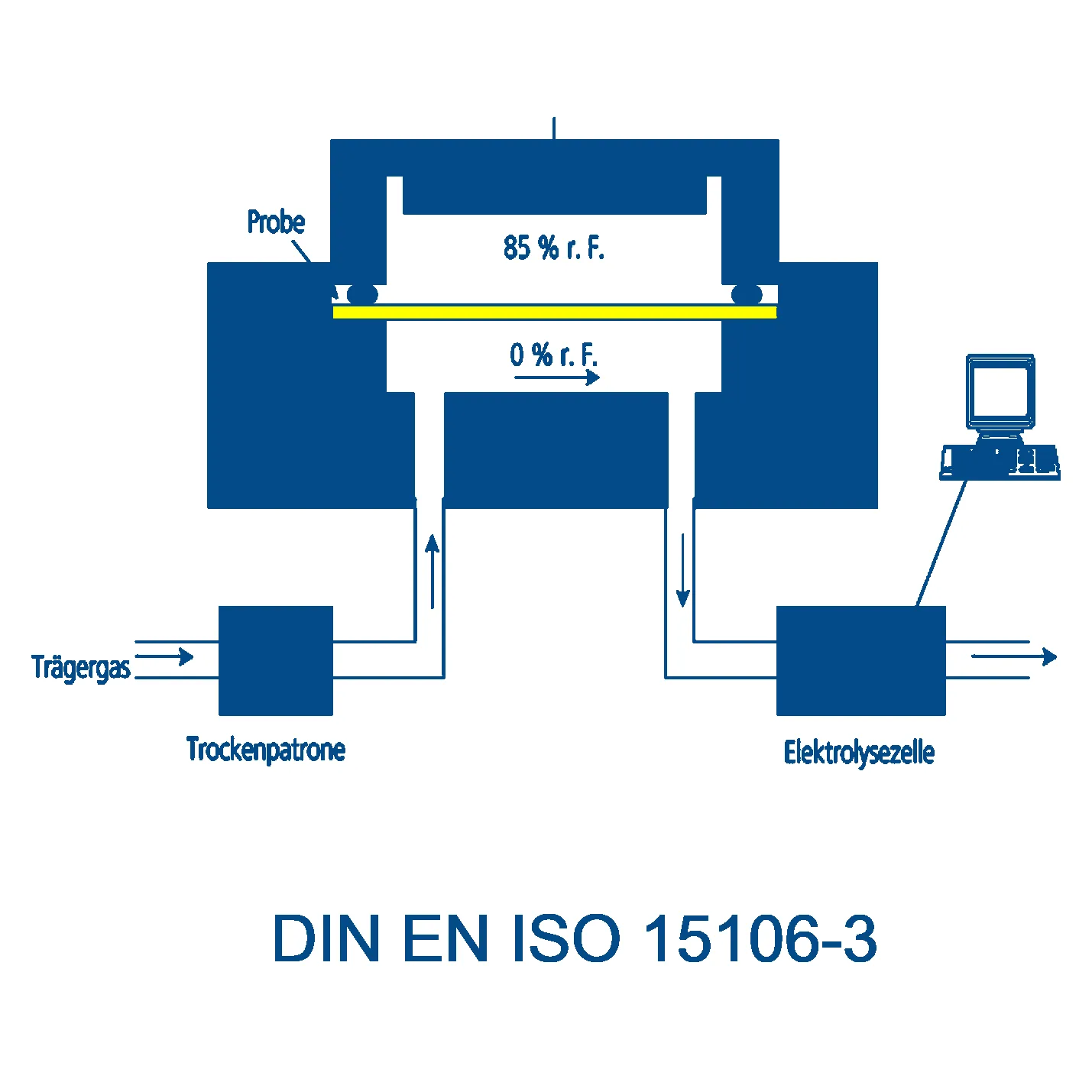
    1 Electrolytic / hydrolysis sensor (ISO 15106-3)

    Standards: DIN EN ISO 15106-3
    Area of application:

    • High-barrier films, metallised or inorganically coated structures
    • WVTR from 0.01 g – m-² – d-¹ to approx. 100 g – m-² – d-¹
    • Moulded packaging (pouches, bottles, pharmaceutical primary packaging)

    Why choose?
    The phosphorus pentoxide (or calcium chloride) sensor system decomposes incoming water vapour electrolytically; the required current is directly proportional to the permeate. As a result, the method achieves very low detection limits and is suitable for premium barrier and shelf-life studies. Innoform offers the same technology for both flat films and complete packaging chambers.


    2 Modulated infrared sensor (ASTM F 1249 / ISO 15106-2)

    Normen: ASTM F 1249, DIN EN ISO 15106-2
    Einsatzbereich:

    • Typical packaging barriers (≈ 0.05 – 50 g – m-² – d-¹)
    • Fast incoming goods and process control (results ≤ 2 h)
    • Temperature and RH-controlled tests for validation studies

    Why choose?
    A modulated infrared detector measures the water vapour absorption in the carrier gas behind the sample. The method delivers reproducible results with short analysis times and automatic climate control – ideal for series testing and comparative material benchmarking.


    3 Gravimetric cup method

    Standards: DIN 53122-1, DIN EN ISO 12572, ASTM E 96
    Area of application:

    • Medium to high WVTR values (≈ 1 – 1000 g – m-² – d-¹)
    • Straight, flat samples ≥ 50 cm²
    • Quality control for standard laminates, paper/plastic composites, breathable construction films

    Why choose?
    The cup method is robust, inexpensive and widely recognised in standards. It measures the actual mass loss and is therefore ideal as a reference or for comparative measurements between laboratories. The disadvantages are longer measurement times (hours to days) and limited sensitivity for high-quality barrier films.


    5 Practical recommendations

    1. Sample conditioning – at least 24 h under test climate to harmonise moisture gradients.
    2. Double measurement – Innoform carries out two determinations as standard in order to recognise outliers at an early stage.
    3. Order reference foils at the same time – have a known barrier tested once a year; this way you can keep an eye on the calibration in the long term.
    4. Select test climate – typically 23 °C / 85 % rH for food packaging, 38 °C / 90 % rH for tropical simulation.

    Complete table of WVTR test methods for films & packaging


    Summary
    Whether standard laminate or high-tech barrier layer: Innoform’s gravimetric, IR and electrolytic processes cover practically every WVTR window of practical relevance. The choice depends on your target WVTR, the time window and the sample geometry – and ultimately determines how reliable your shelf life and process data are.

    You can find the Innoform tests and contact persons here:

  • Precise evaluation of weather resistance

    Precise evaluation of weather resistance

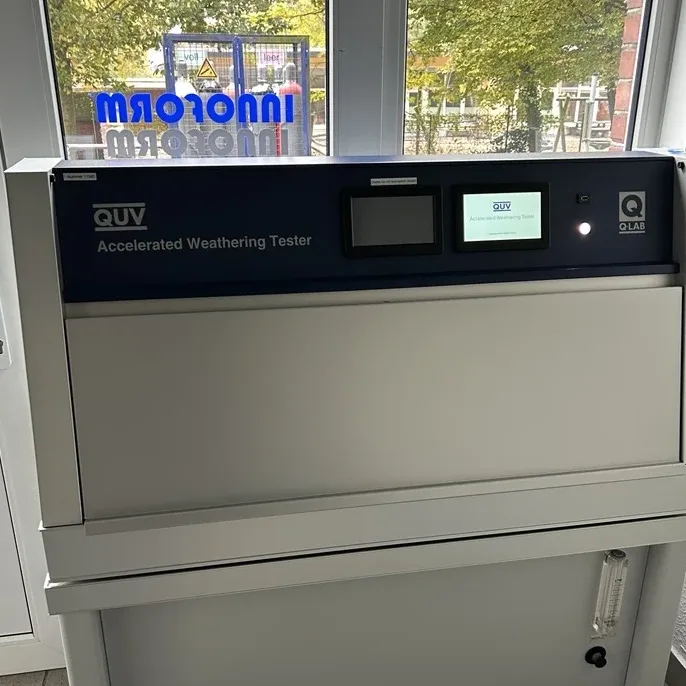
    Q-UV artificial weathering of films and papers helps evaluate weather resistance.

    Overall purpose

    Artificial weathering is an indispensable method for evaluating the long-term durability and weather resistance of plastics. With the help of modern testing devices, such as the Q-UV device, damage caused by UV radiation and moisture can be simulated in a targeted manner. Standardised procedures according to DIN EN ISO 4892-3 and DIN EN 14932 allow realistic ageing processes to be efficiently reproduced. This method provides important insights, particularly for applications in the construction, automotive and agricultural industries. The results are a significant aid to product development and quality assurance.

    Test methods to proof the weather resistance

    Artificial weathering of plastics is an essential part of materials testing focused on weather resistance. It is used to assess the long-term durability of materials when exposed to UV radiation, humidity and temperature. While test methods using xenon arc lamps simulate a broad light spectrum, UV fluorescent lamps enable targeted investigations in the short-wave UV range.

    With the addition of a Q-UV device, tests can now be carried out in accordance with DIN EN ISO 4892-3 and DIN EN 14932. These standards define test methods for assessing the artificial weathering of plastics with UV radiation and moisture. This greatly affects weather resistance. The procedure is particularly relevant for applications in which plastics are exposed to intense solar radiation. These applications include the building industry, the automotive industry, and especially in agriculture.

    The Q-UV tester simulates the damaging effect of UV light and moisture by cyclically exposing the samples. UV fluorescent lamps that emit in defined wavelength ranges are used. Radiation in the UV range has a high energy density and is capable of breaking molecular bonds in plastics. This process leads to embrittlement, discolouration or a loss of mechanical properties.

    In addition to UV radiation, the sample is periodically exposed to moisture in the form of condensation or spray. This cyclical combination of radiation and moisture provides a realistic ageing simulation. It is highly relevant to various classes of materials and their weather resistance.

    The addition of Q-UV to the test capabilities complements existing artificial weathering methods. It allows detailed assessment of material ageing under specific conditions. This knowledge is vital for both product development and quality assurance across a range of industries.

    Find more tests on these subjects here.

  • Precise Assessment of Weather Resistance

    Precise Assessment of Weather Resistance

    Artificial weathering of films and papers using the Q-UV device to test weather resistance.

    Introduction to Artificial Weathering

    Artificial weathering is an indispensable method for evaluating the long-term durability of plastics and ensuring their weather resistance. Using modern testing equipment, such as the Q-UV device, damage caused by UV radiation and moisture can be specifically simulated. Through standardized procedures according to DIN EN ISO 4892-3 and DIN EN 14932, realistic aging processes can be efficiently replicated. This method provides essential insights, particularly for applications in the construction, automotive, and agricultural industries. The results significantly support product development and quality assurance.

    Artificial weathering of plastics is an essential component of material testing. It serves to assess the long-term durability of materials under the influence of UV radiation, moisture, and temperature, thereby testing their weather resistance. While testing procedures using xenon arc lamps replicate a broad light spectrum, UV fluorescent lamps enable targeted investigations in the short-wave UV range.

    Normative Foundations

    With the addition of a Q-UV device, standardized tests according to DIN EN ISO 4892-3 and DIN EN 14932 can now be performed. These standards define testing procedures for the artificial weathering of plastics with UV radiation and moisture. The procedure is particularly relevant for applications where plastics are exposed to intensive sunlight, such as in construction, the automotive industry, or especially in agriculture, to test their weather resistance.

    Damage Mechanisms Under Artificial Weathering

    The Q-UV testing device simulates the damaging effects of UV light and moisture through cyclic exposure of the samples. UV fluorescent lamps are used, which emit in defined wavelength ranges. Radiation in the UV range has a high energy density and is capable of breaking molecular bonds in plastics. This process leads to embrittlement, discoloration, or loss of mechanical properties, which impair weather resistance.

    In addition to UV irradiation, the material sample is exposed to moisture in the form of condensation or spray mist at periodic intervals. This cyclic combination of radiation and moisture enables a realistic aging simulation that is highly relevant for various material classes, and also tests weather resistance.

    The expansion of testing capabilities through Q-UV complements existing methods of artificial weathering and enables a detailed assessment of material aging under specific conditions. These findings are of critical importance for both product development and quality assurance in various industries, particularly for the assessment of weather resistance.

    Further tests on this topic can be found here

  • Interview on Conformity Work 2025

    Interview on Conformity Work 2025

    Innoform Testservice at the 22nd Inno-Meeting in Osnabrück

    At the 22nd Inno-Meeting in Osnabrück, Karsten Schröder spoke with his colleagues from Oldenburg about food contact materials and conformity work. Here are the key points from the interview:

    Laboratory Equipment & Device Technology

    The interview provided comprehensive insight into the challenges and requirements for testing food contact materials and the importance of compliance with new regulations.

    You can find our services related to conformity work here.

  • White Paper: Compliance Testing of Food Contact Materials

    White Paper: Compliance Testing of Food Contact Materials

    Why they are indispensable

    Safety and Compliance of Food Packaging 

    Food contact materials – primarily packaging in this context – are subject to special regulations. They not only serve to protect food, but also influence its safety and quality. But how can it be ensured that these materials comply with strict legal requirements? Our new white paper “Compliance Testing of Food Contact Materials” provides a comprehensive overview of current regulatory requirements, relevant testing procedures and practical solutions for users of food contact materials as well as manufacturers and processors in the packaging industry. 

    Which tests are required? 

    The type of tests required depends on the materials used, the manufacturing process and the intended use. Our white paper explains in detail: 

    • Overall migration testing: Ensuring that no impermissible amounts of substances transfer to the food. 
    • Specific migration tests: Proof that individual, potentially concerning substances remain below legal limits. 
    • Sensory tests: Testing for changes in odor, taste and appearance. 
    • Risk assessments: Identification of potential hazards from contaminants or degradation products. 

    Regulatory Requirements and Challenges 

    In addition to EU Regulation (EC) No. 1935/2004, numerous other legal requirements apply, such as the Plastics Regulation (EU) No. 10/2011 or the GMP Regulation (EC) No. 2023/2006. National regulations and individual measures for specific materials, such as metals, printing inks or recycled plastics, must also be observed. 

    Particularly challenging is the proof of compliance in complex supply chains, which is typically based on declarations of compliance from suppliers. However, these documents alone are not sufficient – careful plausibility checks and, if necessary, own tests are required to minimize regulatory risks. 

    Benefits of our White Paper for Your Company 

    Our white paper provides valuable information for all companies working with food contact materials, especially in the packaging industry: 

    • Legal certainty: Avoid liability risks and ensure compliance with all relevant regulations. 
    • Quality management: Optimize your internal processes for compliance assessment. 
    • Market advantages: Documented compliance strengthens the trust of customers and business partners. 
    • Practical solutions: Concrete recommendations for action and checklists for implementation in your company. 

    Request now for free! 

    Don’t miss the opportunity to expand your knowledge about compliance testing and make your company more legally secure. Request our free white paper “Compliance Testing of Food Contact Materials” now and benefit from well-founded expertise and practical tips directly from our laboratory in Oldenburg. 

    Request your personal copy directly from our test service

    Or also feel free to request the guide directly from Heike Schwertke by phone at 0441 94986 14 

  • Material Characterization and Microscopy

    Material Characterization and Microscopy

    Innoform Testservice presents its latest findings on material characterization at the Inno Meeting

    At the Inno Meeting 2025 in Osnabrück, Innoform Testservice presented material characterization using a digital microscope. Daniel Wachtendorf and Matthias Böhne explained its application in damage analysis, complaints, and customer error investigations. It is also increasingly being used in standard material characterization.

    A key advantage of the digital microscope is its depth of field, which enables three-dimensional images to be captured and surface damage to be analyzed in detail. This helps determine the origin of defects, whether they come from the outside or inside. Matthias emphasized that the microscope is also useful for examining specks, as it enables user-friendly and detailed analysis.

    We use the microscope not only for speck analysis and 3D photos, but also for packaging testing: It provides overview and detailed images to inspect multilayer films, for example.

    For analyzing the materials in the layers of a multilayer film, additional methods such as infrared spectroscopy, thermal analysis, and polarization microscopy are used. These methods help identify the specific materials in the layers, especially when the layers are very thin.

    Another topic was the examination of paper packaging, which behaves differently than plastic. Here, it is tested whether the material is really plastic-free or whether plastic components are still present. Barrier measurement, particularly oxygen and water vapor permeability, is also an important topic in the development of new packaging materials.

    But the two of them explained this much more personally and better themselves in this video here.

    Interview as part of the 22nd Inno-Meeting in Osnabrück

    Test service offerings related to this topic can be found here