
Mechanical Properties
Mechanical, material and technological properties
The practical characterization of the mechanical and technological properties of packaging materials using standardized laboratory methods requires a high degree of experience and a sense of responsibility. The results serve to create and monitor technical specifications, to evaluate test series or sample productions and in the processing of damage cases.

Mechanical, material and technological properties
Film properties play a central role in the performance of modern flexible packaging and can be divided into mechanical, material and technological properties.
Mechanical film properties such as tensile strength, elongation, puncture and tear resistance determine the load capacity of a packaging film in the processing and application process.
Material properties result from the polymer structure and material combination, for example in PE, PP, PA or multilayer composites, and influence barrier behavior, resistance to chemicals and recyclability.
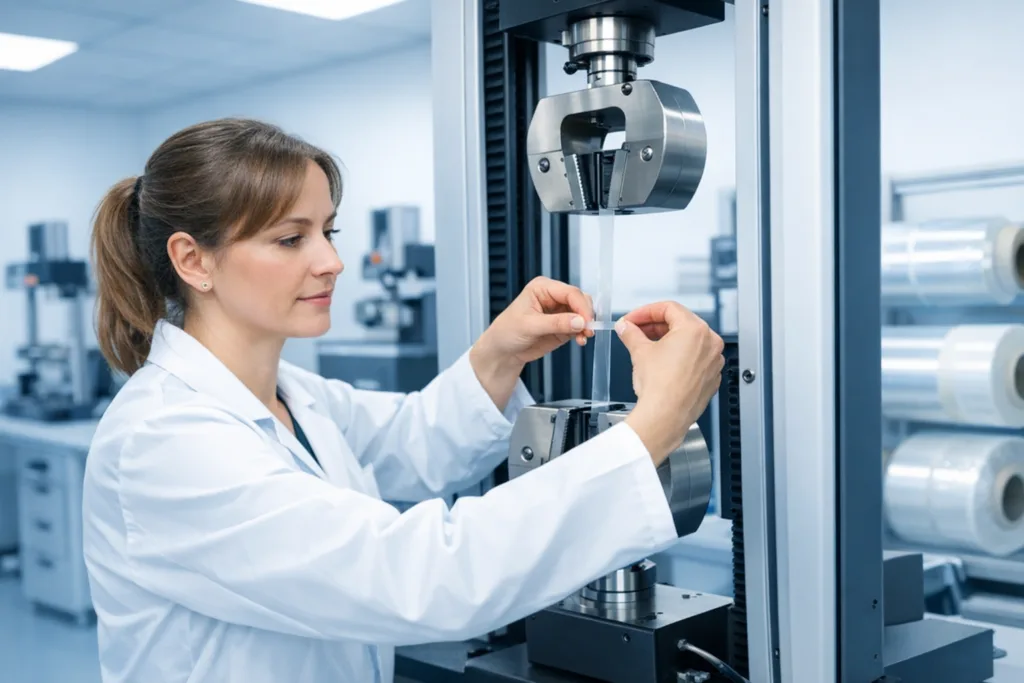
Technological film properties, on the other hand, include aspects such as sealability, slip and antiblock behavior, printability or suitability for specific processes such as thermoforming, laminating or coating. Only the coordinated interaction of these properties enables functional, safe and sustainable packaging solutions for food, pharmaceutical and non-food applications.
We offer these technological/mechanical test methods
To determine the mechanical and technological properties of your product, we use various test methods. You can then use the findings from these tests to improve the properties of your product or to create and validate specifications. This is often a requirement of quality standards or audits.
We offer you the following mechanical and technological test methods, among others:
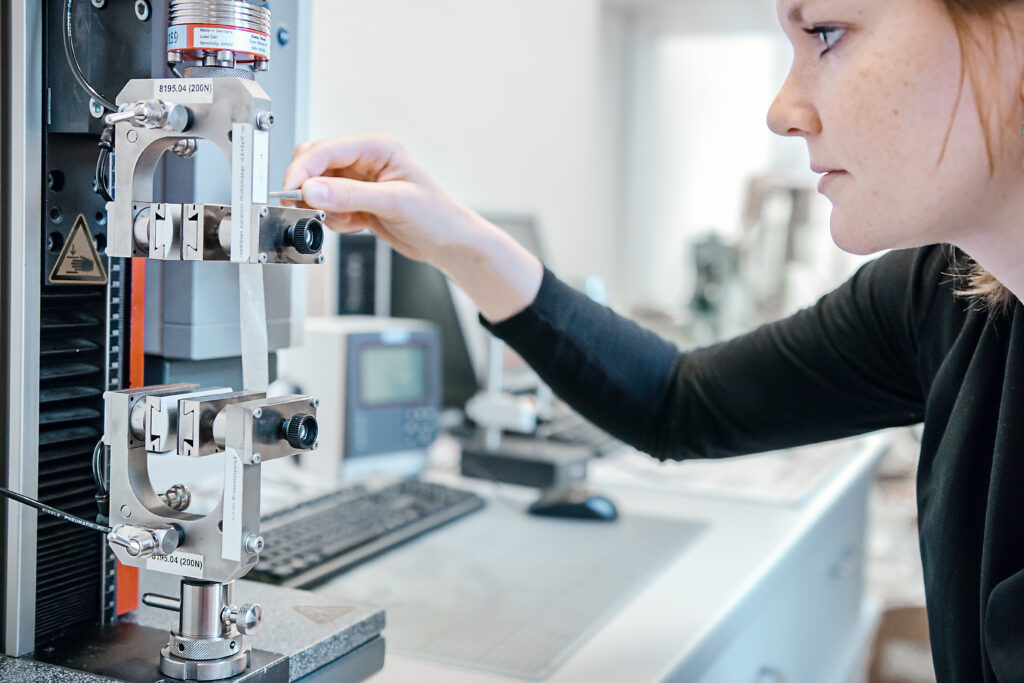
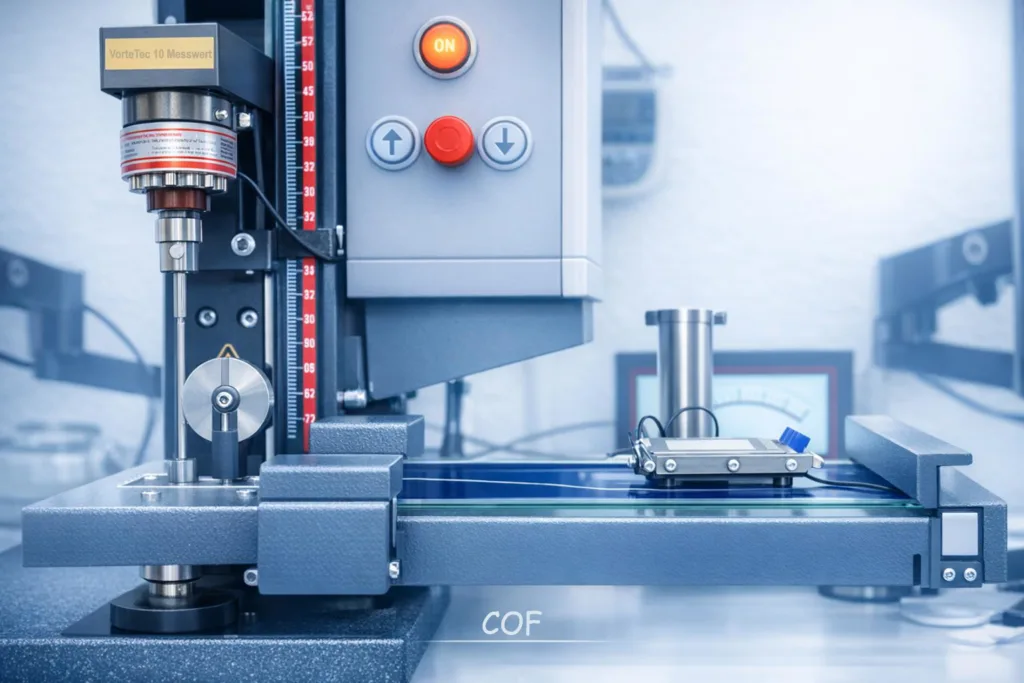
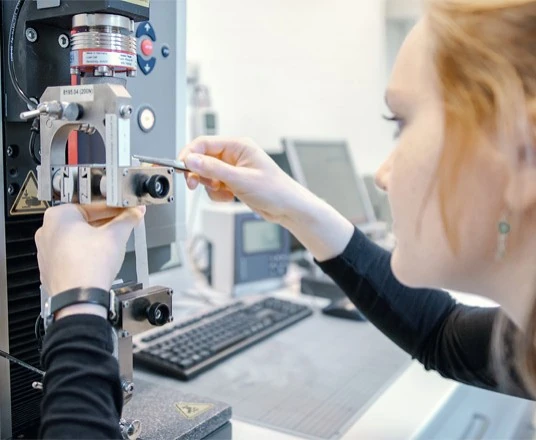
Bond strength
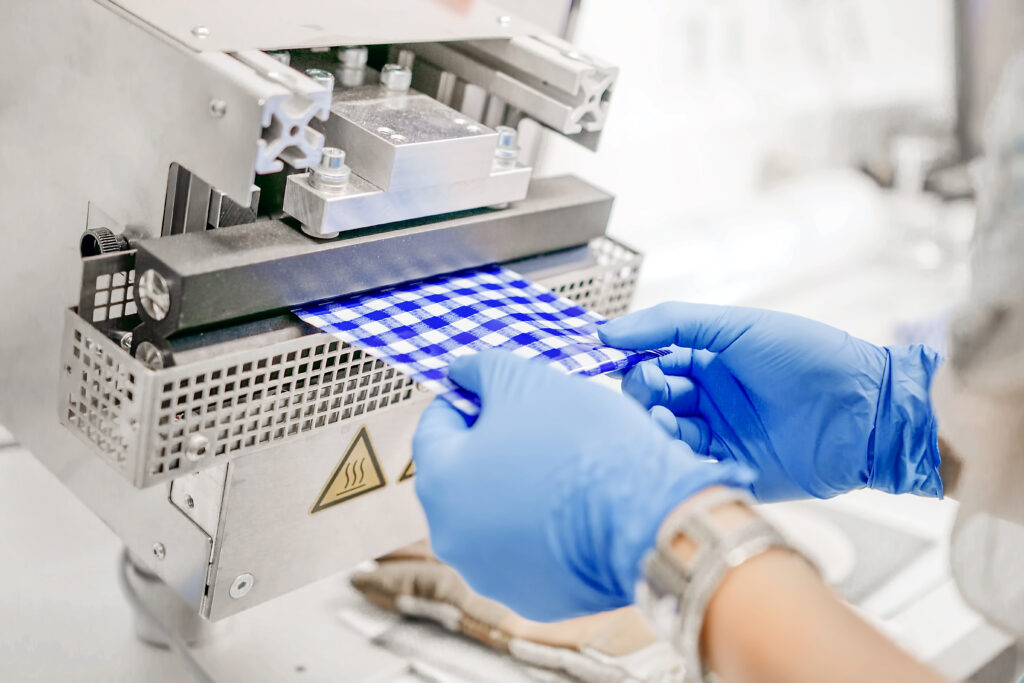
Sealing tests (determination of sealing properties)
Further specific tests
Film thickness measurement
Tear propagation tests (quasi-static and dynamic (Elmendorf))
Tesa test (abrasion resistance)
Flex durability test (Gelbo flex test)
Dart Drop Test (impact resistance testing)
Blocking test
The practical characterization of the mechanical and technological properties of packaging materials using standardized accredited laboratory test methods requires a high degree of experience and modern equipment. In addition, the relation to production and packaging processes is often crucial for the interpretation of the results. This is exactly where Innoform positions itself as an expert team with over 25 years of experience.
The results serve to create and monitor technical specifications, to evaluate test series or sample productions and to process damage cases. With us, your test orders are in proven hands. Your questions become our testing tasks.
In practice, the interpretation of test results makes the difference.
Individual consultation
Speak with our experts
Discuss your test orders with our colleagues before we start the work. In addition to selecting the right test method, the interpretation and classification of the test results for your specific process or your specific question is always decisive for a usable test result. We look forward to hearing from you!
Your contact person

Matthias Böhne
+49 441 94986-11
matthias.boehne@innoform.de
Top tests in this area
Prüfmethodensuche
Puncture resistance, quasi-statical (temperature range – 40 up to + 120 °C)
Mechanical propertiestensile test films and laminates (temperature range -40 to +120 °C)
Mechanical properties- Mechanical properties
- Mechanical properties
- Mechanical properties
Seal strength, tensile test on strips (temperature range -40 to +120 °C)
Mechanical properties- Mechanical properties
Sealing and welding properties of films, verification and comparison by laboratory sealing press
Mechanical propertiesDetermination of thickness of plastic films, aluminium foils, plane multilayer-materials and sheets
Mechanical properties- Mechanical properties