Blog

  • Failure Analysis Begins with Material Analysis: What Packaging Reveals About Its Defects

    Failure Analysis Begins with Material Analysis: What Packaging Reveals About Its Defects

    Packaging quality issues rarely occur without warning. Suddenly a sealing seam opens unexpectedly, the bond comes apart, barrier properties deteriorate or processing problems accumulate in production. The visible symptoms are often clear – but the actual causes are not.

    This is exactly where the damage analysis begins. And in many cases the first route leads to material analysis.

    Why the actual cause often remains hidden

    When an error occurs, the focus is often initially on the production process. Have machine parameters been changed? Were there any fluctuations in processing? Are the conditions in the warehouse responsible?

    These questions are important. Nevertheless, practice shows again and again that the actual cause often lies in the material itself.

    Even small changes in the raw material, layer structure or material properties can have a significant impact on the functionality of packaging. The problem: Such changes are usually not visible to the naked eye.

    A systematic material analysis helps to replace assumptions with facts.

    Typical damage patterns with flexible packaging

    Many quality problems can be traced back to some recurring damage patterns.

    Let the damage speak for itself through appropriate analysis and thereby understand errors in depth before measures are implemented.
    Karsten Schröder

    Delamination of composite materials

    If individual layers separate from one another, adhesion promoters, adhesives or process parameters may be the cause. Material changes on the supplier side are also conceivable.

    Abnormalities when sealing

    Insufficient seam strength or unstable sealing parameters can indicate changes in the sealing layer, contamination or unsuitable material combinations.

    Change in barrier properties

    If oxygen or water vapor permeability increases unexpectedly, it is worth taking a closer look at the layer structure and the barrier materials used.

    Processing problems

    Wrinkling, web instability or unexpected friction properties can be caused by material fluctuations or different raw material qualities.

    In all of these cases the same question arises: Does the material actually meet the expected properties?

    Material analysis as a tool for root cause research

    Modern analyzes enable significantly deeper insight than classic incoming goods inspections.

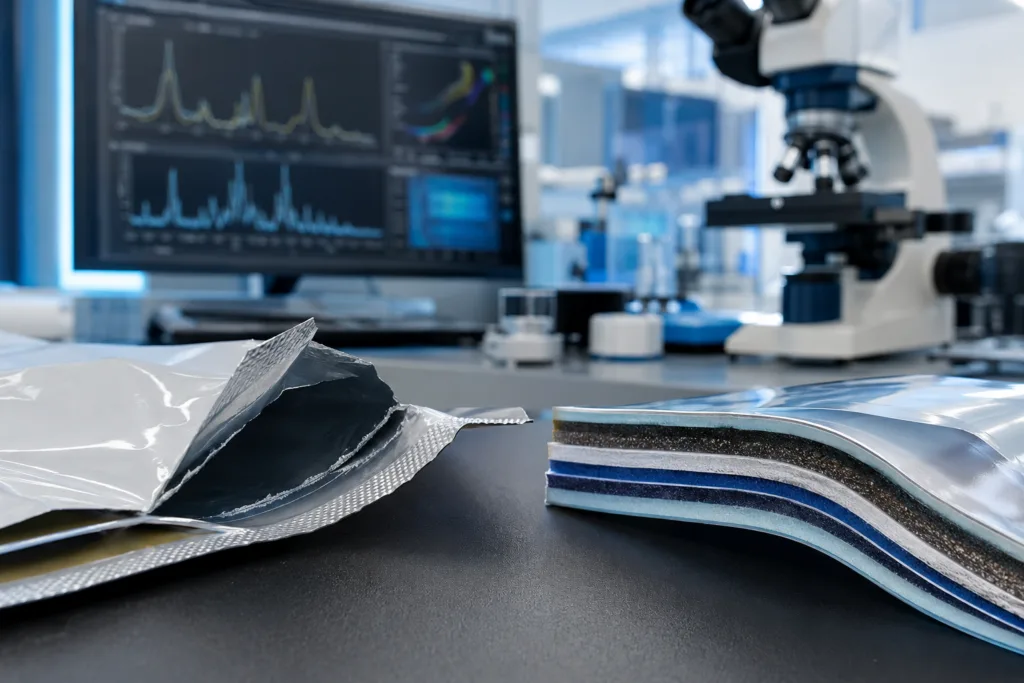
    Material identification using FTIR

    With the help of infrared spectroscopy (FTIR), plastics and other materials can be identified and compared with each other.

    This makes it possible to check whether the materials used actually correspond to the intended materials or whether there are deviations.

    Examination of the layer structure

    Especially with composite films, the exact composition determines the subsequent function of the packaging.

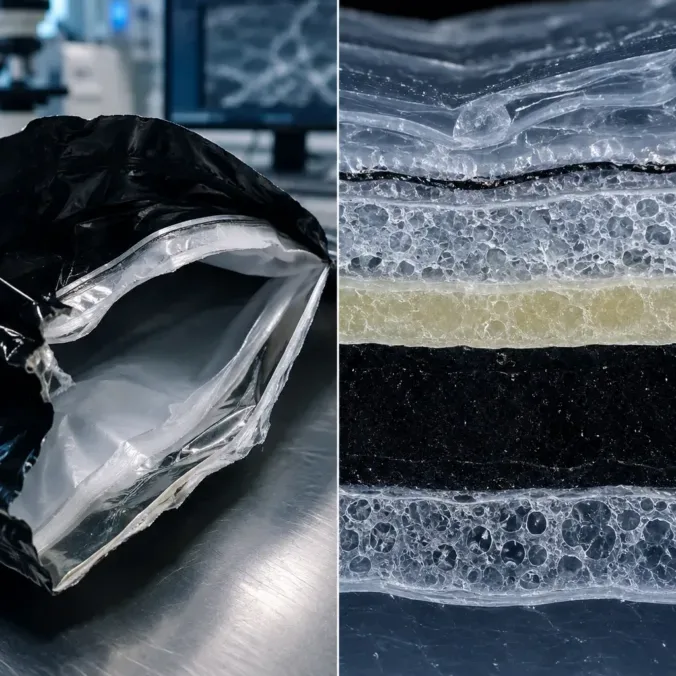
    Microtome sections and microscopic examinations make individual layers visible and allow statements to be made about material combinations, layer thicknesses and structural structure.

    Thermal analyses

    Methods such as DSC analysis (Differential Scanning Calorimetry) provide information about melting behavior, crystallinity and material composition.

    This allows differences between the target and actual states to be recognized, which have a direct impact on processing and function.
    Why guesses often become expensive

    Time pressure often arises when processing complaints. Production stoppages, delivery bottlenecks or quality deviations require quick decisions.

    However, this is exactly where there is a risk: If causes are only assumed, there is a risk that measures will be targeted at the wrong adjustment screws.

    Machine parameters are adjusted, processes are changed or suppliers are changed without the actual cause being clearly identified.

    A well-founded material analysis, on the other hand, creates a reliable basis for decision-making and often shortens the path to actually solving the problem.

    Material analysis is more than just processing complaints

    Damage analysis is often only commissioned when a problem has already arisen. Material analysis can also be used preventatively.

    Typical fields of application are:

    • Reviewing new supplier materials
    • Comparison of alternative qualities
    • Securing material changes
    • Evaluation of recycled content
    • Quality monitoring in goods receipt
    • Documentation for critical applications

    If you understand material properties early on, you can avoid many later problems.

    Conclusion

    Packaging provides clues as to its errors – you just have to be able to read them correctly. While visible damage often only represents symptoms, the actual causes often lie in the material structure or in changed material properties.

    Material analysis provides the necessary facts to evaluate quality problems in a well-founded manner and to systematically narrow down the causes. It is therefore a central tool for damage analysis and supports companies in making well-founded decisions instead of reacting to assumptions.

    Our tip

    If quality deviations occur or material changes are suspected, it is worth taking an analytical look at the packaging itself. Modern testing methods can provide valuable information and help to identify causes more quickly and reliably.

    Frequently Asked Questions (FAQ)

    What is special about material analysis for packaging? +

    Material analysis identifies the chemical composition, melting point (DSC), and precise layer structure of packaging films using spectroscopic and microscopic methods.

    When does failure analysis help? +

    It helps with complaints such as seal seam failures, delamination (peeling of film layers), or insufficient barrier properties to find the exact root cause and resolve costly process defects.

    Which devices are used for material analysis? +

    Standard equipment in our accredited laboratory includes FTIR spectrometers for material identification, DSC measuring instruments for thermal analysis, and high-resolution optical microscopes for layer thickness measurements on microtome cross-sections.
    Related articles

  • Food Law and the PPWR in Transition

    Food Law and the PPWR in Transition

    What manufacturers of food packaging should know

    The regulatory requirements for food packaging are increasing continuously. In addition to the established provisions of European food law, the new Packaging and Packaging Waste Regulation (PPWR) is bringing sustainability, recyclability and critical substance groups such as PFAS increasingly into focus. At the same time, the requirements for declarations of conformity, migration testing and the assessment of NIAS (Non Intentionally Added Substances) are rising.

    In the Innoform podcast (in German), Karsten Schröder and Heike Schwertke, authorised officer and head of the conformity department at Innoform Testservice, discussed the most important developments and challenges for packaging manufacturers, converters and companies placing food contact materials on the market.

    European legislation for food contact materials

    The legal basis for food contact materials is the European Framework Regulation (EC) No 1935/2004. It applies to all materials that come into contact with food – regardless of whether they are plastics, paper, glass, metal or other materials.

    The aim is to ensure that no substances transfer to food in quantities that endanger health or unacceptably change the properties of the food.

    For plastics, Regulation (EU) No 10/2011 provides a detailed specific measure. Among other things, it regulates:

    • Which substances may be used
    • Which limit values must be observed
    • How migration tests are to be carried out
    • Which information must be passed on along the supply chain

    Plastics are therefore among the most comprehensively regulated packaging materials in food contact. The situation is different for other material groups such as printing inks or paper, for which national regulations often have to be consulted.

    Declarations of conformity: the backbone of the supply chain

    A declaration of conformity is far more than a formal document. Its purpose is to pass on information about the substances used, limit values and conditions of use along the entire supply chain.

    The raw material producer informs the polymer manufacturer, who informs the film manufacturer and finally the packaging manufacturer. Only then can the food producer assess whether a material is suitable for their application.

    Particularly important are details on:

    • specifically regulated substances
    • permissible temperature ranges
    • contact time
    • food types
    • tests and calculations performed

    However, a declaration of conformity does not replace testing. It must be verifiable at any time through technical documentation and reliable evidence. Authorities can request the corresponding documentation.

    Migration: the decisive proof

    The central question with food contact materials is:

    Which substances can actually transfer into the food?

    Different testing approaches are used to answer this question.

    Overall migration

    Overall migration determines the total amount of substances that can transfer from a material to the food. It serves above all as a measure of the general inertness of the packaging material.

    Specific migration

    Here, individual substances are examined in a targeted manner. This particularly concerns substances of toxicological relevance or with defined limit values. The test serves to demonstrate that these substances do not exceed the permissible migration levels.

    In addition, modelling calculations are increasingly used today to predict migration behaviour on the basis of substance properties and material data.

    NIAS: the often underestimated challenge

    Special attention is now being paid to so-called NIAS (Non Intentionally Added Substances). These are substances that are not used intentionally but are present in the material or arise during production, for example as:

    • impurities
    • degradation products
    • reaction products
    • oligomers

    While known raw materials and additives are often well documented, NIAS pose particular challenges for risk assessment. Many of these substances cannot be derived from raw material lists alone.

    Comprehensive screening analyses are therefore becoming more important. At Innoform Testservice, GC-MS methods are used for this purpose, for example, with which even unknown substances can be identified and assessed.

    Bisphenol A and the re-evaluation of critical substances

    A current example of the dynamics of regulation is bisphenol A (BPA). The European Union has now banned the intentional use of BPA in most food contact materials.

    Such decisions are based on extensive toxicological assessments by institutions such as:

    • the European Food Safety Authority (EFSA)
    • the German Federal Institute for Risk Assessment (BfR)

    This development shows that manufacturers must continuously monitor the substances they use and take regulatory changes into account at an early stage.

    PPWR: sustainability meets product safety

    The Packaging and Packaging Waste Regulation (PPWR) creates an additional regulatory layer. While classic food law primarily addresses consumer protection, the PPWR focuses on aspects such as:

    • recyclability
    • recycled content
    • resource conservation
    • substance bans
    • circular economy

    PFAS are currently the subject of particularly intense discussion. This group of substances is often referred to as “forever chemicals”, as many of them are very difficult to degrade in the environment. The PPWR already contains initial restrictions and requirements for the declaration of such substances.

    In addition, an additional declaration of conformity will be required in future, containing information on recyclability, PFAS content, heavy metals and other environmentally relevant aspects.

    Where companies face the greatest risks today

    From a practical perspective, three critical areas currently stand out:

    1. Imported materials

    Importers legally assume the manufacturer’s responsibility. Declarations of conformity alone are not sufficient. What is required are reliable technical documents and test reports that substantiate the statements they contain.

    2. Insufficient raw material information

    Particularly for substances with technical purities of, for example, 80–90%, information about secondary components, impurities or reaction products is often missing. However, this data is increasingly needed for NIAS assessment.

    3. Recyclates in food contact

    With the increasing requirements of the PPWR, recycled materials will gain in importance. At the same time, they present new challenges for risk assessment, as additional NIAS, additives and unexpected contamination can occur.

    Paperisation is not a simple solution

    Parallel to plastics recycling, the trend towards so-called “paperisation” – the replacement of plastic components with paper-based solutions – is growing.

    But paper does not automatically solve the regulatory challenges. Paper also contains additives, binders, printing inks and functional coatings. Moreover, there is as yet no Europe-wide specific measure for paper in food contact. Assessment is often based on national recommendations and regulations.

    In addition, due to its higher diffusion openness, paper can in some cases even intensify migration-related issues. Here too, further testing and assessment procedures will be required in the coming years.

    Conclusion

    The requirements for food packaging continue to grow. Classic topics such as declarations of conformity, migration testing and substance assessments remain indispensable. At the same time, the PPWR, PFAS regulation, recycling quotas and recyclates are creating new challenges.

    For manufacturers, this means one thing above all:

    Transparent supply chains, reliable documentation and sound testing will become even more important in the future than they are today.

    Only those who know their materials, raw materials and potential risks will be able to offer safe and legally compliant packaging solutions in the long term.

  • Precise OTR analysis for high-barrier packaging

    Precise OTR analysis for high-barrier packaging

    At a glance

    INNOFORM Testservice extends the OTR measurement according to ISO 15105-2 with a variant using 100 % oxygen as the permeant. This lowers the limit of quantification for oxygen transmission by a factor of 5 — a decisive advantage for high-barrier packaging in pharma, food and technical applications whose permeation rates can no longer be reliably resolved with standard tests (21 % O₂ from air).

    When standard methods are no longer enough for ultra-high barriers

    Precise measurement of the oxygen transmission rate (OTR) is becoming increasingly challenging for modern high-barrier packaging. Standard methods reach their limits with extremely low permeation rates. INNOFORM Testservice therefore extends the OTR test according to ISO 15105-2 by using 100 % oxygen — for significantly higher sensitivity and reliable measurement results even in the lowest measuring range.

    Extremely low oxygen transmission rates can hardly be measured under conventional test conditions — the measured flux lies close to the instrument’s quantification limit and the measurement uncertainty dominates the result.

    Our approach: more sensitivity through 100 % oxygen

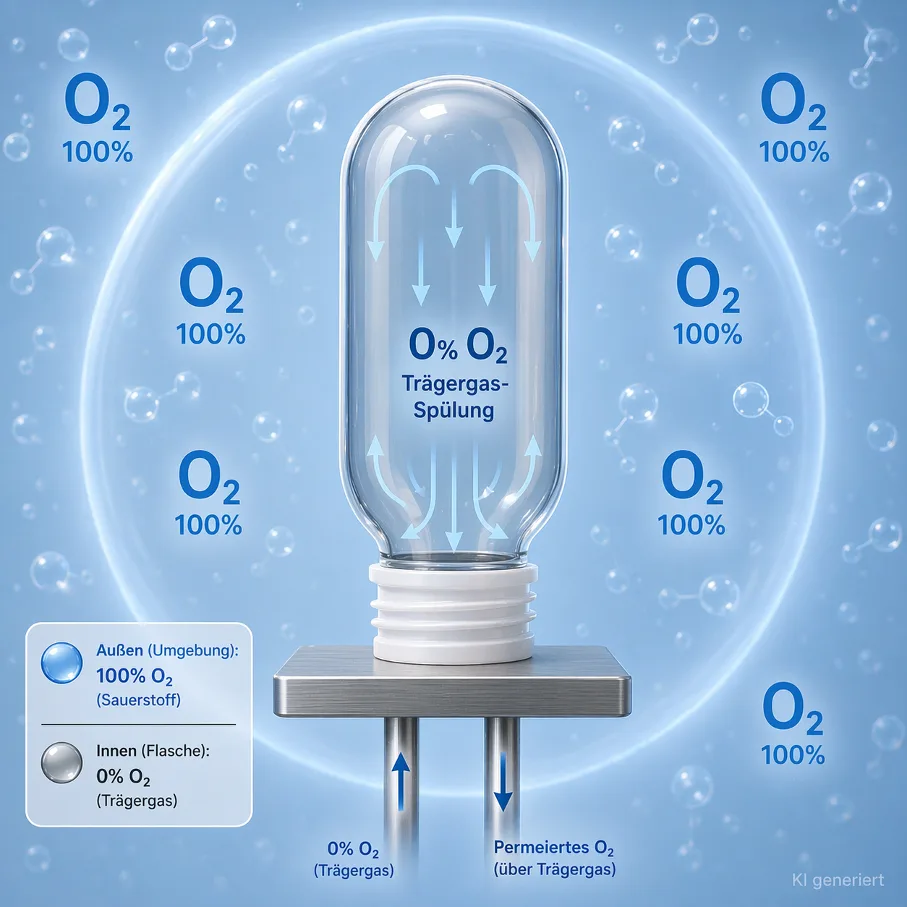
    To reliably detect even the smallest permeation rates on finished packaging or closures, we deliberately use pure oxygen as the permeant in the test according to ISO 15105-2.

    The principle is simple — the effect is decisive:

    A significantly increased oxygen partial pressure raises the measurable flux without distorting the material behaviour.

    Your benefit: clarity where others hit the wall

    These optimised test conditions yield a quantification limit reduced by a factor of 5.

    For you, this means:

    • Reliable measurability of extremely low OTR values
    • Precise comparability of high-barrier materials
    • Sound decision basis for development and quality assurance

    In sensitive areas such as pharma, food or technical applications, this additional accuracy becomes a decisive competitive advantage.

    Conclusion

    With our extended OTR test, we create differentiation where standard methods are no longer sufficient and provide you with the data you need — for example, to calculate the best-before date of your packaged food products.

    Frequently asked questions about OTR measurement for high-barrier packaging

    What does OTR mean?

    OTR stands for Oxygen Transmission Rate — the oxygen permeability of a packaging material. It describes how much oxygen migrates through a film or packaging per unit area and time, usually expressed in cm³/(m²·d·bar). For high-barrier films, values are often below 1 cm³/(m²·d) — close to the resolution limit of classical methods.

    Why 100 % oxygen instead of ambient air?

    In atmospheric air, the oxygen partial pressure is around 0.21 bar. With pure oxygen, it rises to 1 bar — the driving concentration gradient is multiplied by five. Since permeation is proportional to the partial pressure difference (permeation mechanism), the measurable flux also becomes five times larger. The material-specific permeability remains unchanged; only the measurement signal moves clearly above the quantification limit.

    Which types of packaging benefit from the method?

    Especially high-barrier packaging for pharma, MAP food (modified atmosphere packaging), oxygen-sensitive diagnostics and technical applications. Typical examples: metallised laminates, EVOH-containing multilayers, SiOx- or AlOx-coated films and aluminium composite films — tested on finished pouches, bottles, cups and closures.

    Are the results still comparable with ISO 15105-2?

    Yes. The test is still performed according to ISO 15105-2; only the permeant concentration is raised to 100 % O₂. Climate, sampling and evaluation remain compliant with the standard. On request, we report the value both at 1 bar partial pressure and — via linear conversion — as an equivalent air value (21 % O₂), to ensure comparability with historical data and supplier specifications.

  • PFAS in Flexible Packaging: Analytical Guidance through Total Fluorine Determination

    PFAS in Flexible Packaging: Analytical Guidance through Total Fluorine Determination

    The discussion around PFAS in packaging has gained significant momentum in recent months. At the latest with the PPWR limit values, many companies are facing the same question:
    How can PFAS in flexible packaging be reliably detected – and which analytical approach is sensible?

    As part of an Inno-Talk, Dr. Tim Schlüter (Innoform Testservice) presented the current state of analytics. The key finding:
    “There is currently no harmonized analytical method – but there are practical ways to reliably assess PFAS.”

    This is precisely where the expanded testing services at Innoform Testservice come in.


    PFAS Analytics: Challenge and Reality

    PFAS comprise a very large substance group with several thousand potential compounds. A complete individual substance analysis is therefore hardly feasible in practice.

    At the same time, the PPWR demands clear limit values for food contact packaging. This creates a field of tension:

    • very low limit values
    • complex substance groups
    • lack of standardized test methods

    Analytics must therefore proceed pragmatically and work with suitable screening strategies.


    Additional Challenge with Polyolefins

    This is particularly relevant for polyolefins such as PE and PP, which make up a large proportion of flexible packaging systems.

    In practice, PFAS are often deliberately used here:

    • already in the raw material as an additive
    • during film extrusion as a processing aid

    The goal of these so-called processing aids is to:

    • improve melt properties
    • stabilize material flow in the extruder
    • optimize the surface quality of the film

    These functional additives can lead to measurable fluorine contents even in supposedly non-critical materials.

    For assessment, this means:
    PFAS entries are often system-inherent and not always fully documented. Analytical verification is therefore necessary.


    Total Fluorine as Key to Quick Guidance

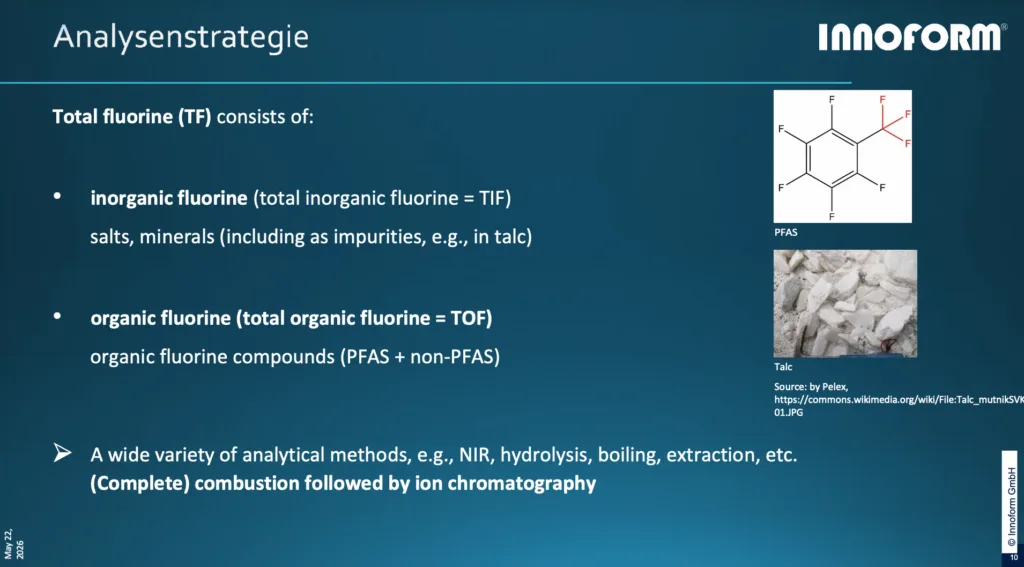
    A central approach is the determination of total fluorine content (Total Fluorine, TF).

    This enables:

    • a quick assessment of potential PFAS contents
    • prioritization of materials
    • targeted selection of further tests

    The method is based on combustion of the sample followed by determination of fluorine content.

    Advantage

    • Detection of all fluorine-containing components
    • independent of known individual substances
    • suitable as a screening method

    Limitation

    • no direct statement about individual PFAS
    • further analytical steps required

    Differentiation: Where is the Relevant Fluorine?

    For more precise assessment, total fluorine content is further differentiated into:

    • inorganic fluorine (TIF)
    • organic fluorine (TOF)

    The organic fluorine fraction is particularly relevant, as this is where possible PFAS are contained. This is derived from the difference between total fluorine and inorganic fluorine.

    The procedure requires:

    • reproducible measurement conditions
    • coordinated temperature control
    • experience in interpretation

    Limitations of Current Methodology

    The methods discussed in the regulatory environment are not suitable without restrictions.

    In particular, limitations become apparent with:

    • incomplete implementations of individual procedures
    • methodological differences between guidelines and practical implementation

    Analytics therefore primarily delivers one thing:
    reliable guidance, but not yet complete standardization.


    Practical Question from the Inno-Talk

    A frequently asked question from the Inno-Talk was:

    Must testing be performed if no PFAS are intentionally used?

    The answer is clear:

    • What matters is the PFAS content in the material
    • the origin of the substance is of secondary regulatory importance

    Even unintentional entries from raw materials, additives or processes must be taken into account.


    Innoform Testservice: Extended Capacity for PFAS Analyses

    To meet the increasing requirements, Innoform Testservice has expanded its capacity.

    We can currently:

    • perform total fluorine determinations routinely
    • offer differentiations between inorganic and organic fluorine
    • systematically assess materials for PFAS risks
    • process larger sample volumes at short notice

    This enables us to provide the necessary analytical capacity to give companies well-founded guidance on the PFAS content of their packaging.


    Inno-Talk Available as Recording

    The content of this article is based on the Inno-Talk on PFAS analytics with Dr. Tim Schlüter.

    The recording is still available and offers:

    • detailed insights into the test methods
    • practical examples
    • answers to typical questions from the industry

    Conclusion

    The regulatory requirements are defined, the analytical standards are still developing.

    For companies, this means:

    • proceed systematically
    • understand risks
    • use analytics in a targeted manner

    Total fluorine determination offers a practical entry point for this.

    With its expanded capacity, Innoform Testservice supports
    reliably assessing PFAS in flexible packaging and making well-founded decisions.

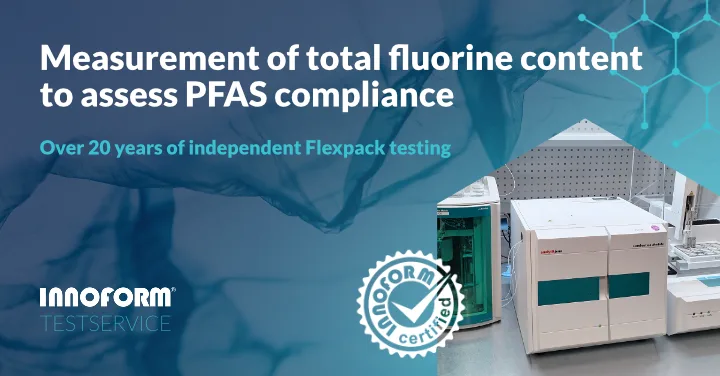
    Measurement of total fluorine content to assess PFAS compliance
  • ISO/IEC 17025 – Accreditation as a Quality Promise: Effort, Benefits and the Reality of Laboratory Operations

    ISO/IEC 17025 – Accreditation as a Quality Promise: Effort, Benefits and the Reality of Laboratory Operations

    The accreditation of a testing laboratory according to ISO/IEC 17025 is considered the international gold standard of laboratory qualification. But what lies behind the certificate – and is the effort really worth it? A sober look at requirements, processes and concrete added value.


    What is ISO/IEC 17025 – and why is it relevant?

    ISO/IEC 17025 is the globally applicable standard for the competence of testing and calibration laboratories. It is issued by national accreditation bodies – in Germany by DAkkS (Deutsche Akkreditierungsstelle GmbH) – and forms the basis for international recognition of test results within the framework of multilateral agreements (e.g. ILAC MRA).

    Without accreditation, test reports in many regulated areas – food safety, medical devices, packaging, construction – are simply not marketable.


    The accreditation process: What laboratories actually have to deliver

    Initial certification is not a one-time administrative act. The standard requires a fully documented management system that equally covers structural, personnel and technical requirements. Key obligations include:

    • Proof of personnel competence – qualification, training records and regular assessment of all testing staff
    • Traceability of measurements – calibration of all measuring equipment according to national and international reference standards
    • Validation and verification of test methods – in-house developments and standards-based methods must be demonstrably mastered
    • Environmental conditions and equipment management – controlled, documented test conditions as a prerequisite for reproducible results
    • Impartiality and confidentiality – structural measures against conflicts of interest, anchored in the organizational structure

    In addition, there are regular internal audits, management reviews and external surveillance audits by the accreditation body – typically on a two-year cycle, with complete reassessment after five years.


    The real effort – clearly quantified

    Honesty is required here: initial accreditation ties up considerable resources. Experience shows that medium-sized laboratories must plan for six to twelve months lead time. The main burden lies in creating and maintaining a quality management system, method validation, and training and qualification of personnel.

    Ongoing costs arise from calibration cycles, proficiency tests for method confirmation, and the administrative burden of auditing. Those who underestimate this effort endanger not the certificate – but the credibility of the entire operation.


    The added value: What accreditation means for laboratories and their clients

    • For the laboratory:
      Systematically better processes, reduced error rates, clear responsibilities and a structured basis for the further development of test methods. Accreditation creates internal commitment that is often lacking without external pressure.
    • For the client:
      Accredited test reports are internationally recognized and admissible in court. The traceability of every measurement to SI units and the complete documentation create a level of trust that no ISO 9001 certificate alone can achieve. For companies with regulated supply chains, commissioning an accredited laboratory is not optional – it is mandatory.

    Conclusion: Accreditation is not an end in itself

    ISO/IEC 17025 is demanding, expensive and elaborate. That is precisely its value. Laboratories that consistently implement this standard deliver measurably more reliable results – and their clients can make well-founded decisions on this basis.

    Accreditation is not a marketing tool. It is technical proof that must be earned anew every day.

    Would you like to know whether your test results are prepared on an accredited basis? Contact us – we will guide you through the entire process, transparently and without promises we cannot keep.

  • EU Creates Clarity for Stretch Films & Hoods

    EU Creates Clarity for Stretch Films & Hoods

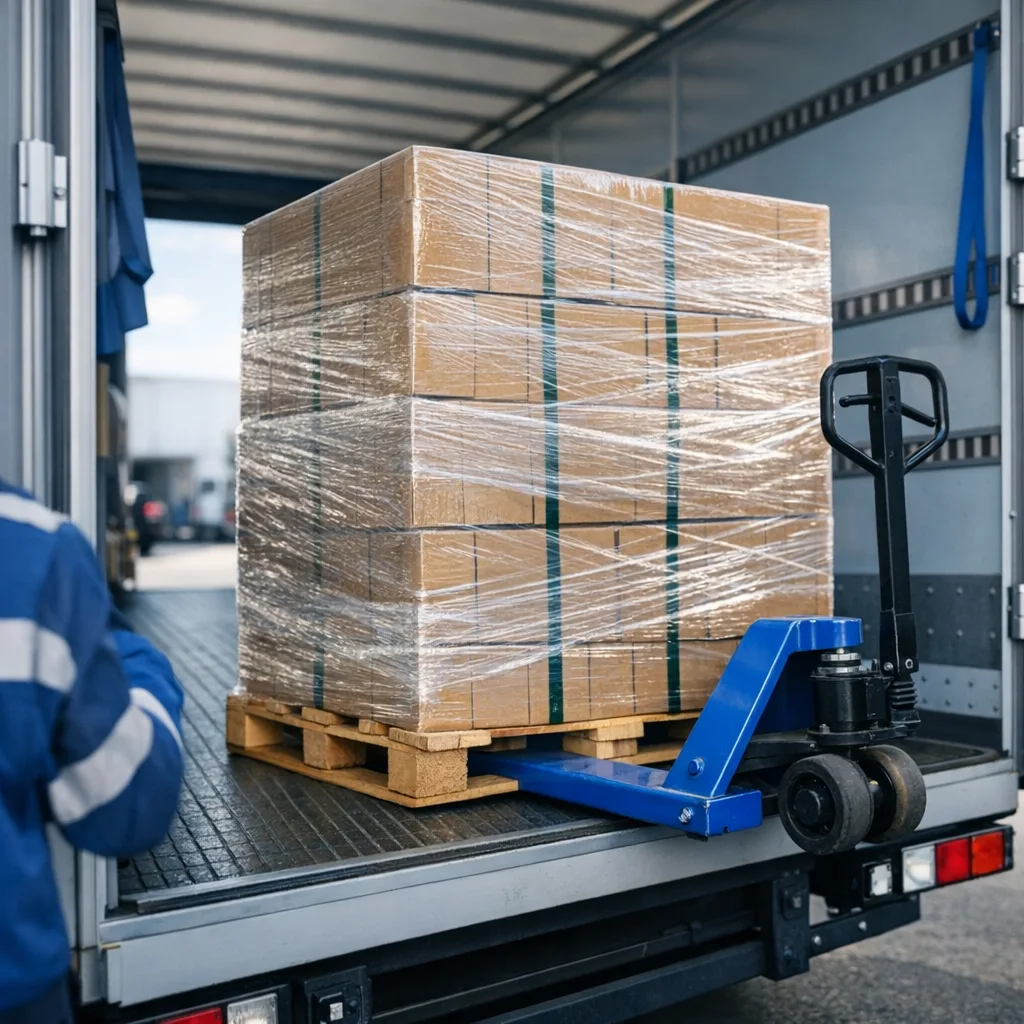
    With the new European Packaging and Packaging Waste Regulation (PPWR), many companies in the packaging industry still face uncertainty. Particularly affected: pallet wraps and strapping bands, which are used daily for safe goods transport.
    A delegated decision by the EU Commission now brings important clarity – and relief for users of flexible packaging.

    What is this specifically about?

    The PPWR sets ambitious reuse targets for transport packaging in the long term. For certain use cases, even one hundred percent reusability was envisaged – such as for internal transport or between companies in the same Member State.

    This is precisely where the Delegated Decision (EU) 2026/429 comes in:
    It exempts pallet wraps (e.g. stretch films) and strapping bands used to secure palletized goods from this 100% reuse requirement.

    The key statements of the decision – briefly explained

    For companies in the flexible packaging industry, the new regulations mean above all one thing: realism instead of blanket requirements.

    • No obligation for 100% reusability for pallet films
      Stretch films and strapping bands may continue to be used as single-use solutions, including for internal or national transport.
    • Recognition of technical and economic limitations
      The EU Commission clarifies that a complete switch to reusable pallet wraps would currently involve disproportionately high costs, a lack of market maturity for automated systems, and potential disruptions to supply chains.
    • System targets remain in place
      However, the general reuse target of 40% for transport packaging remains. Different packaging formats can be offset against each other.

    What does this mean in practice?

    For users and manufacturers of flexible packaging, the decision is an important signal:

    “Not every packaging is sensible and economically reusable with today’s state of technology – and this is exactly what the EU Commission expressly recognizes here.”

    Single-use stretch films thus remain a recognized and necessary packaging material, provided they are used functionally, safely and efficiently. The focus shifts away from blanket reuse towards appropriate system solutions that consider product protection, logistics and sustainability together.

    Assessment from the testing laboratory perspective

    This decision confirms a key insight from practice for packers and manufacturers of stretch films: Sustainability cannot be determined solely by reusability. Material usage, product protection, process reliability and recyclability also play a crucial role.

    The new EU decision thus creates planning certainty – and a reliable basis for factual discussions around packaging strategies under the PPWR.

  • Understanding the fat barrier of fibre-based packaging – why testing is crucial

    Understanding the fat barrier of fibre-based packaging – why testing is crucial

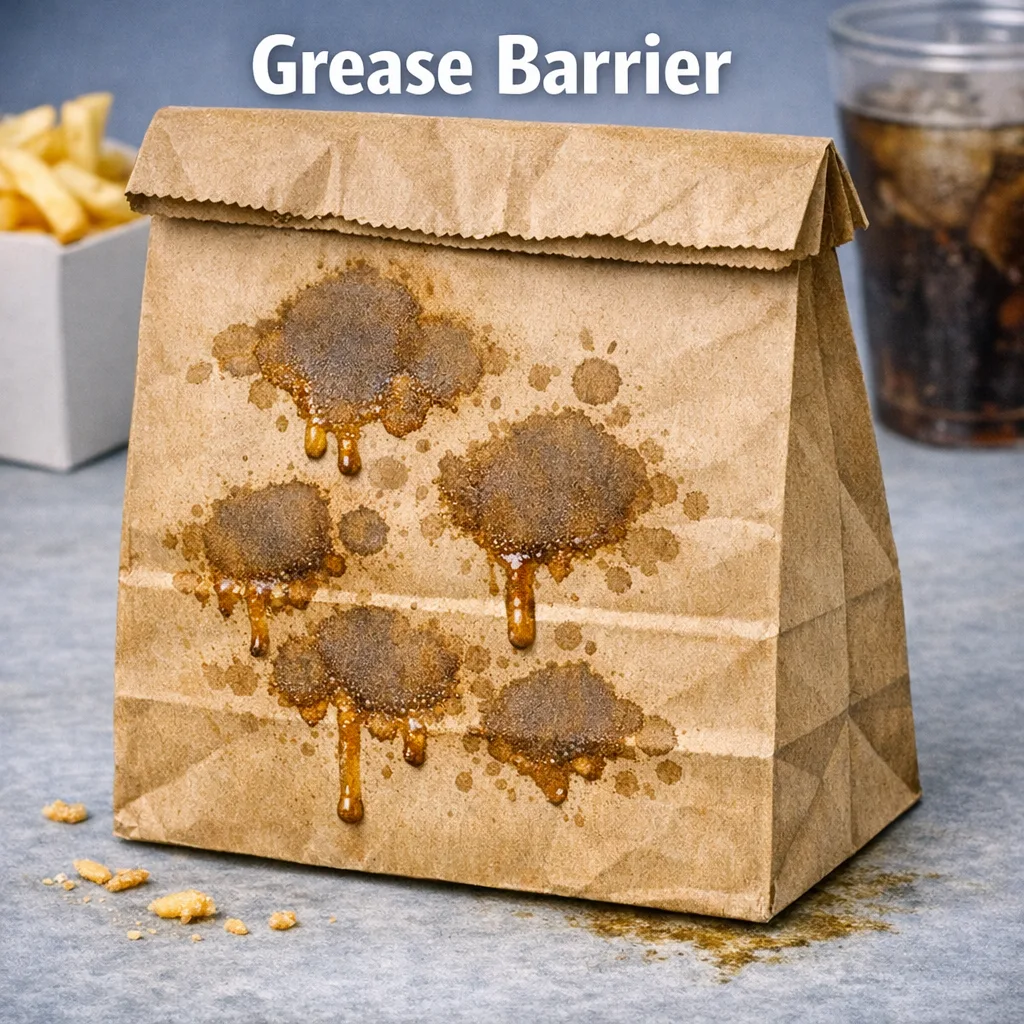
    Fatty foods pose particular challenges for packaging. Fats can penetrate materials, affect their appearance or cause problems from the very first contact. This is precisely why tests such as fat resistance, fat permeability and fat repellency play a central role – both in development and in quality assurance. 

    In this context, two fundamental perspectives can be distinguished: 

    • Barrier effect (fat resistance & fat permeability) → Behaviour within the material 
    • Fat repellency (lipophobia) → Behaviour on the surface  

    It is only the combination of these two approaches that allows for a realistic assessment. 

    Fat resistance and fat permeability: the barrier is the deciding factor in the long term.

    Together, fat resistance and oil permeability describe a material’s ability to retain oil and limit its passage.

    • Fat permeability indicates how easily and how quickly fat migrates through a material  
    • Fat tightness answers the question of whether this barrier is sufficient for the application  

    Why is this relevant? 

    In practical use, the main focus is on the long-term effect

    • Protection of the product throughout its entire storage period 
    • Prevention of grease migration and structural material failure
    • Ensuring the functional properties of the packaging 

    Key question: 
    Does the material reliably repel fat? 

    Oil repellency (KIT test) – the surface is the first point of contact

    Fat repellency describes the behaviour of fat on the surface of the material

    • Fat can either be rejected or 
    • it wets and penetrates  

    The KIT test provides a standardised assessment of this via a parameter (KIT level). 

    Why is this relevant? 

    The user interface often determines the first impression and short-term performance:

    • Preventing visible fat stains 
    • Impact on consumer perception
    • Protection against initial wetting and the resulting penetration

    Key question: 
    What happens when fat first comes into contact with the packaging? 

    Structure vs. surface – two sides of the same coin

    Property Fat tightness & permeability Fat repellency (KIT) 
    Focus Material structureSurface 
    Statement Migration patternsWetting resistance
    Time horizonLong-term reviewQuick test
    Meaning Functional barrierAppearance & First impression 

    Why both tests are necessary in practice

    A high KIT value alone does not guarantee high fat density. Fat behaviour is always the result of several factors – and that is precisely why it is so important to consider them together:

    • Good fat repellency can delay grease from sticking, but it cannot replace a barrier
    • Good barrier properties delay penetration, but do not necessarily prevent staining
    • Materials – particularly paper-based ones – often exhibit time-dependent behaviour  

    Typical practical implications 

    • Complaints: visible fat stains despite adequate protection
    • Quality issues: Fatting during prolonged storage, Sensory impairment
    • Process disruptions: Fat affects sealing, adhesion, mechanical stability or handling  

    This interaction is becoming increasingly important, particularly in the context of sustainable packaging solutions (e. g. paper-based systems).

    Classification by application 

    • Product development: 
      A combination of barrier assessment and surface analysis  
    • Quality assurance: 
      Clear requirements regarding grease density, supplemented by KIT values  
    • Material optimisation: 
      Targeted adaptation of coatings and structures  

    Conclusion

    The assessment of fat behaviour can be boiled down to two key questions: 

    • What happens within the material? → Oil resistance & oil permeability  
    • What happens on the surface? → Fat repellency  

    These two aspects are inextricably linked. Only by considering them together can we develop packaging that is both functional and visually appealing – from the very first encounter through to long-term use. 

  • Impact of EU Regulation 2022/1616 on flexible packaging

    Impact of EU Regulation 2022/1616 on flexible packaging

    What is it about?

    EU Regulation 2022/1616 sets out how plastics may be recycled if they are to come into contact with food again at a later stage.
    It is intended to ensure that recycled materials do not contain any substances harmful to health.

    For the flexible packaging industry (films, bags, laminates), this regulation has very specific implications.


    First things first1. First things first

    Not all recycled materials are suitable for use in food packaging.
    The key factor is not whether a material is “recycled”, but rather:

    • how it was recycled
    • which method was used
    • where the waste material comes from

    What is currently allowed – and what isn’t?

    ✅ Permitted (as of April 2026)

    1. Mechanical PET recycling

    • Applies only to PET
    • The recycling process must:
      • assessed by the EFSA
      • and be registered throughout the EU
    • Works particularly well for:
      • bottles
      • plain PET film (single-material)

    This means it can generally be used for PET-based flexible packaging, provided it is sorted by type.


    2. Recycling in closed and controlled cycles

    • The material comes from defined, monitored systems
    • Examples:
      • production leftovers
      • Return schemes
      • B2B cycles
    • Advantage:
      • hardly any foreign substances
      • low risk of contamination

    These sources are particularly interesting for film manufacturers, but they are organisationally challenging.


    Not permitted (for food contact)

    • Mechanically recycled PE or PP films from household waste
    • Multilayer recycled materials from open collection systems
    • Recycled materials without proven decontamination performance

    These materials must not be used for food packaging.


    Why does this affect flexible packaging in particular?3. Why does this affect flexible packaging in particular?

    Flexible packaging has three structural drawbacks:

    1. Many material combinations
      Composites are difficult to assess definitively
    2. Large surface area
      greater exposure to potential contaminants
    3. Unregulated material flows
      Origin and previous use often unknown

    The Regulation assumes that:

    If you don’t know exactly what was in the plastic before and how it’s made, you shouldn’t simply reuse it for food.


    Chemical recycling – a ray of hope, but not yet a solution4. Chemical recycling – a ray of hope, but not yet a solution

    Chemical recycling is mentioned in the Regulation, but:

    • not yet approved for general use
    • permitted only as “new technology” under observation

    Chemical recycling is particularly strategically important for flexible packaging, but there is as yet no general regulatory approval.


    What does this mean in practical terms for the industry?5. What does this mean in practical terms for the industry?

    • PET continues to grow in importance
    • Design for recycling is a requirement, not an option
    • PE/PP PCR testing for food remains severely restrictedPE/PP‑PCR für Food bleibt stark eingeschränkt

    In future, companies must be able to answer

    • Where does the recycled material come from?
    • Which method was used?
    • Has the process been approved and registered?

    Strategic implications for manufacturers of flexible packaging

    The regulation clearly steers the industry in the direction of:

    • fewer materials
    • simpler structures
    • controlled cycles
    • Early coordination between design, recycling and regulation

    Recyclability is becoming a regulatory requirement, not just a sustainability claim.


    Fazit

    EU Regulation 2022/1616 is not a ban on recycling, but a clear market selection:

    Only recycled materials from processes that have been verified as safe may be used in flexible food packaging.

  • NEW: PFAS analysis via total fluorine determination

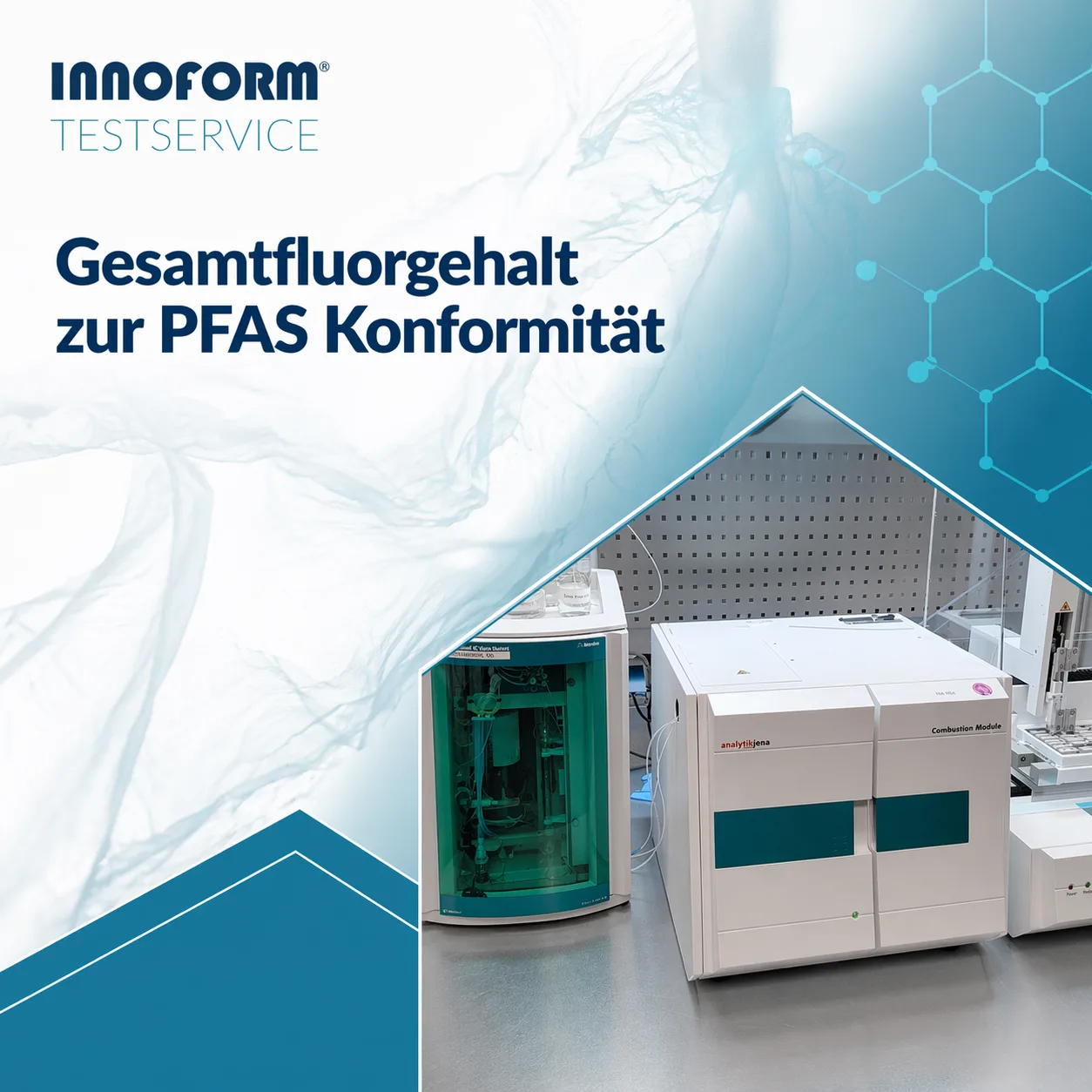
    NEW: PFAS analysis via total fluorine determination

    Upon the entry into force of the PPWR Regulation (Regulation (EU) 2025/40 on packaging and packaging waste), packaging producers will be asked, from 12 August 2026, to draw up a declaration of conformity in accordance with Article 39. This declaration must demonstrate that the requirements set out in Articles 5 to 12 have been met or confirmed.

    Article 5(5) sets out specific limit values for per- and polyfluoroalkyl substances (PFAS) in packaging materials that come into contact with food, and defines a three-tier limit value system:

    • 25 ppb for individual PFAS (analysed specifically), 
    • 250 ppb for the total of these substances as well as 
    • 50 ppm for the total PFAS content, including polymeric compounds (determined by the total fluorine content)

    When drawing up the declaration of conformity, the PPWR requires that a conformity assessment procedure in accordance with Annex VII be carried out. This procedure is supported by technical documentation. This must include an “adequate analysis and assessment of the risks of non-conformity” and may, where necessary, be supplemented by test reports or similar evidence (Annex VII, Article 2). 

    If it can be demonstrated throughout the supply chain that the raw materials used do not contain any PFAS and that these cannot enter the product during production, analytical testing may not be required, subject to an appropriate risk assessment. 

    However, if there is no definitive confirmation (e. g. because information is missing), it is advisable to carry out appropriate tests or plausibility checks to ensure that the packaging material is free from PFAS.

    It can be assumed that most plastic film packaging, particularly that made from PE and PP, contains PFAS. (Karsten Schröder)

    In a set of guidelines on the PPWR Regulation announced by the European Commission at the end of 2025, the following analysis strategy is proposed: 

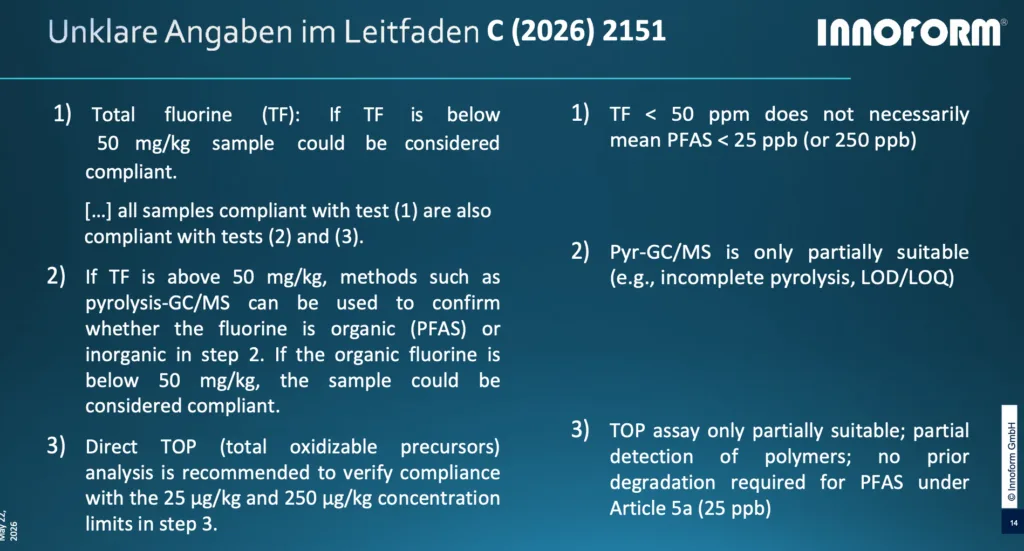
    1. Determination of total fluorine content (TF): Provided that the TF is below 50 ppm, the material shall be considered compliant; no further analysis is required.
    2. If the total fluorine content exceeds 50 ppm, a distinction must be made between organic fluorine (TOF) and inorganic fluorine (TIF). If the organic fluorine content is below 50 ppm, the material is to be regarded as compliant. If the content exceeds 50 ppm, the material would ultimately be deemed non-compliant. Further analyses to verify compliance with the limit values set out in Article 5(5)(a) and (b) would be possible; however, as the material has already been assessed as non-compliant, this is neither mandatory nor recommended. 

    To meet these requirements, the Innoform Testing Service has been offering tests for the total fluorine content and the organic fluorine content (both as subcontracted services) since early 2025.

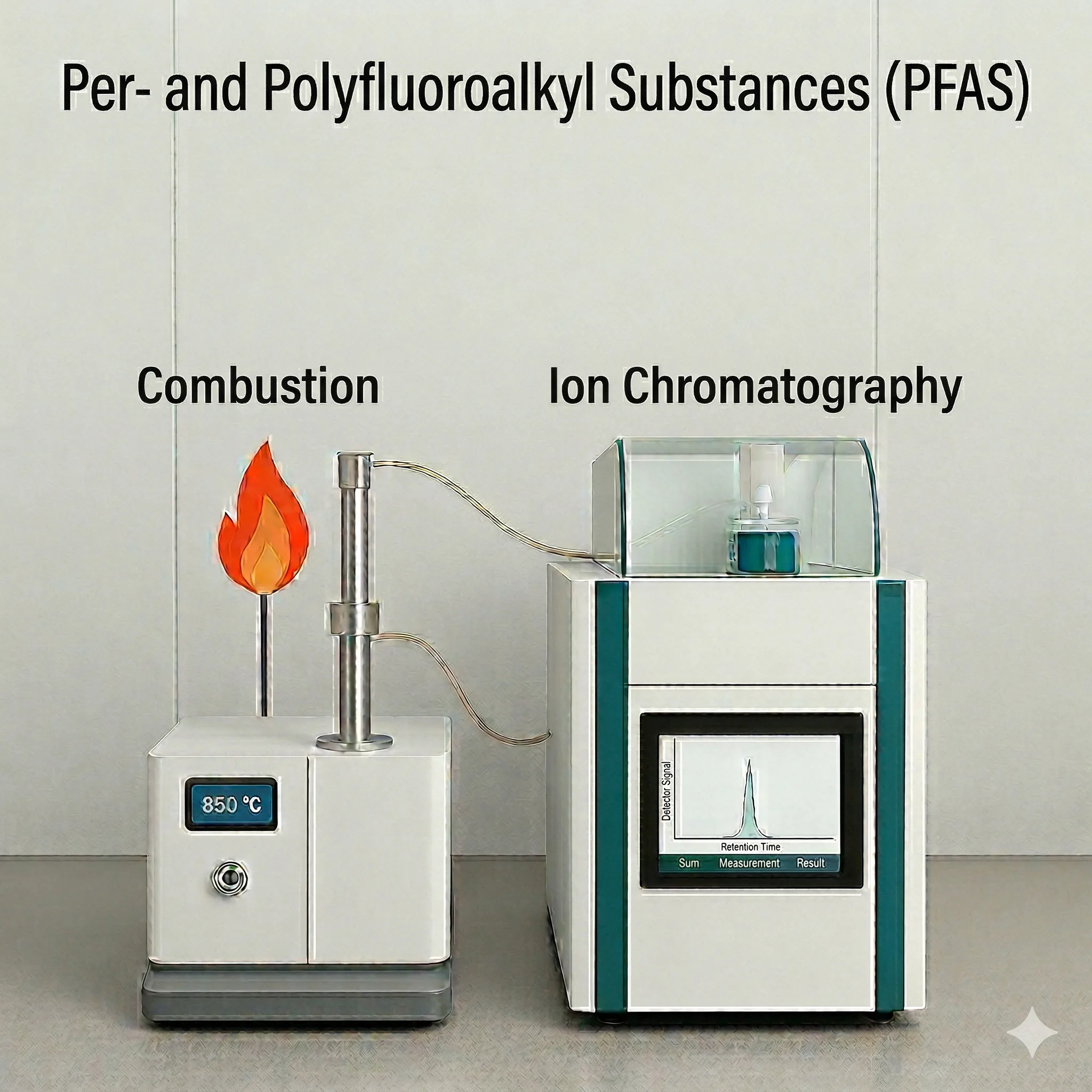
    Due to increased demand, the Innoform Test Service has begun to introduce its own in-house analytical method. Using Combustion Ion Chromatography (CIC), the total fluorine content is determined in accordance with DIN EN 17813 using oxidative pyrohydrolytic combustion, followed by ion chromatography, which is ideally suited to ensuring compliance with the limit value of 50 ppm.

  • Innoform Testservice accredited for 67 standardized tests

    Innoform Testservice accredited for 67 standardized tests


    Innoform Testservice currently holds 67 accredited test procedures according to DIN EN ISO/IEC 17025:2018. This makes the laboratory one of the most comprehensive specialized testing laboratories for film-based and flexible packaging in Europe.

    Benefits of accreditation and why customers should insist on it

    Accreditation according to DIN EN ISO/IEC 17025 confirms the technical competence of a testing laboratory and ensures that tests are performed using validated, internationally recognized procedures. For customers, this means precise and reproducible results that are accepted worldwide and comply with regulatory requirements. Accredited laboratories are subject to regular external monitoring, which ensures consistently high data quality. This significantly reduces the risk of erroneous or non-comparable test reports. Particularly in global supply chains, compliance assessments, and product safety matters, companies benefit from the legal certainty that only accredited test reports provide.

    Scope of accreditation

    The accredited methods cover central areas of flexible packaging analytics:

    • Mechanical properties
    • Permeation and barrier properties
    • Seal and opening forces
    • Migration and food contact
    • Sensory testing
    • Material analysis as well as supplementary Innoform in-house methods

    Selection of well-known and frequently requested standards

    Mechanical

    • ASTM D 882 – Tensile properties of thin plastic films
    • ASTM D 1709 – Impact resistance (free-falling dart)
    • DIN EN ISO 527-3 – Tensile test for films and sheets
    • DIN EN 14477 – Puncture resistance

    Permeation

    • ASTM F 1249 – Water vapor transmission rate (IR sensor)
    • ASTM D 3985 – Oxygen transmission rate (coulometric)
    • DIN EN ISO 15106-2 – WVTR measurement (IR method)

    Seal seam & opening forces

    • ASTM F 88 – Seal strength
    • DIN 55529 – Seal strength
    • DIN 55409‑1/2 – Opening forces of peelable packaging

    Food contact & migration

    • DIN EN 1186‑1/2/3/13 – Overall migration
    • DIN EN 13130‑1 – Specific migration

    Sensory testing

    • DIN 10955 – Sensory testing
    • DIN EN ISO 4120 – Triangle test
    • ISO 13302 – Taste transfer from packaging materials

    Classification

    The breadth of accreditation enables a complete assessment of flexible packaging across all relevant testing disciplines. With 67 accredited standards, Innoform Testservice is among the leading specialized flexible packaging testing laboratories in Europe and offers its customers a high degree of security, comparability, and technical depth.

    Thanks to accreditation, customer audits have become unnecessary and have been uncommon for years. This not only reduces costs and effort but also ensures continuous quality assurance and development through external auditors with foresight and expertise. Ultimately, all Innoform customers benefit from this.