
Compliance Work
Assessment of plastic-based food contact materials, e.g. packaging
Document reviews according to current legislation for completeness, accuracy and plausibility, supplier or manufacturer inquiries – by us if desired, worst-case calculations instead of extensive analytics, development of a testing plan, preparation of a draft for your declaration of compliance based on complete compliance documentation.

Food Safety Compliance – Compliance Testing for Food Contact Materials (FCM)
Food safety compliance means that packaging and other food contact materials meet the applicable legal requirements and are suitable for contact with food. Compliance testing ensures that FCM do not transfer their constituents to food in quantities which could endanger human health and that neither the composition, odor nor taste of the food is affected. The basis is EU regulations such as Regulation (EC) No. 1935/2004 as well as material-specific regulations, for example Regulation (EU) No. 10/2011 for plastics. As part of compliance testing, the provided documents such as declarations of compliance for raw materials or test reports are reviewed to determine whether the confirmations, results of migration tests, NIAS assessments, sensory tests, etc. are sufficient to prove compliance. A food contact material is considered compliant when all tests are successful and a complete declaration of compliance is available.
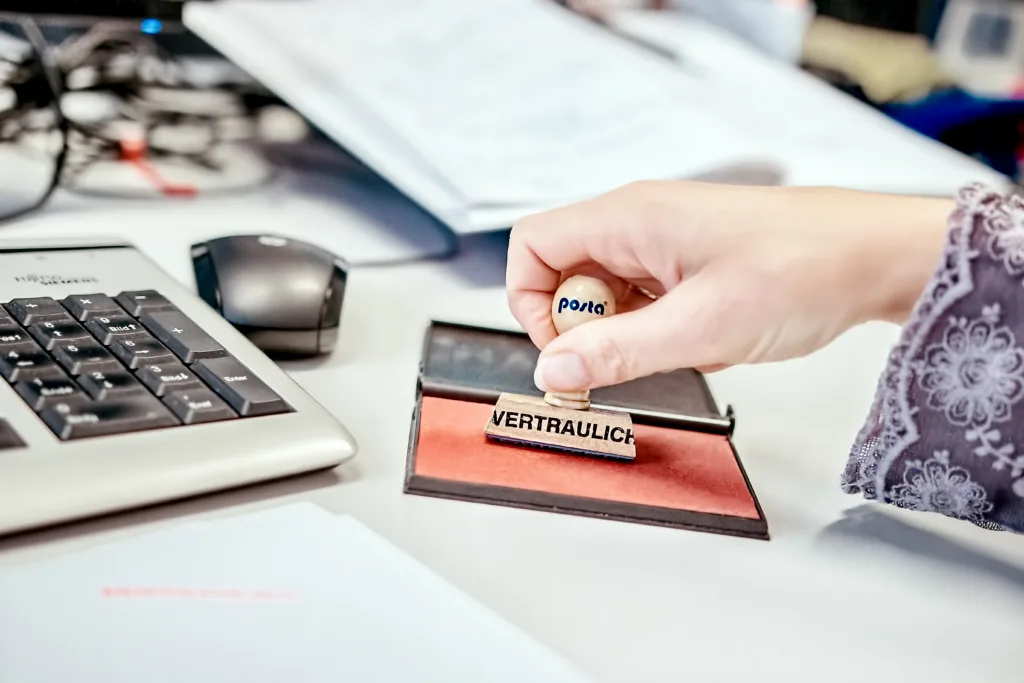
Compliance Work – Legally Compliant Packaging for Food
Compliance work comprises the systematic assessment of plastic-based food contact materials, particularly packaging, with regard to their food law compliance. The aim is to ensure that the applicable food law requirements are met and that the materials are suitable for their intended or foreseeable use.

The verification of legal compliance is primarily carried out through document reviews according to current EU food law. Existing documents are checked for completeness, technical accuracy and plausibility. The compliance documentation must be structured in such a way that it enables reliable and traceable statements about the nature and suitability of food contact materials in case of dispute – for example in the case of supplier or manufacturer inquiries or vis-à-vis supervisory authorities.
Different approaches can be considered for assessing compliance. These include worst-case calculations to estimate possible substance migration as well as analytical testing, such as migration studies or NIAS screenings. Based on the analysis of the available documents, we support you in preparing an individual testing plan, if required in developing a compliance assessment as well as in preparing or adapting drafts for declarations of compliance based on complete and structured compliance documentation.
The compliance status represents a summary assessment of all available information for the food law evaluation of the food contact material. It shows whether the packaging can currently be classified as legally compliant and at the same time makes outstanding issues or further action required within the compliance work transparent.
Our Plus for Complex Supply Chains
If desired, we also act as a neutral data trustee. In this role, we can request confidential recipe, substance and material information directly from your suppliers, secured by non-disclosure agreements (NDAs). This sensitive data is assessed by us confidentially and included in the compliance testing without being passed on to you or third parties. This enables us to provide a well-founded compliance assessment even with complex supply chains – while maintaining the protection of intellectual property of all parties involved.
With this offering, we support medium-sized food and packaging manufacturers as well as manufacturers of other food contact materials in meeting current food law requirements in the EU
Your contact person

Heike Schwertke
+49 441 94986-14
heike.schwertke@innoform.de
Top Tests in this Area
Prüfmethodensuche
Overall migration acc. Reg. (EU) No 10/2011 standard test conditions (OM 0 – OM 7)
Overall migration Sensory analysisOverall migration special tests / fully customizable
Overall migration Sensory analysisOverall migration rapid tests, alternative simulants or substitute tests
Overall migration Sensory analysis- Overall migration Sensory analysis
Organoleptic analysis of packaging materials/Testing of odour transfer (intrinsic odour)
Overall migration Sensory analysis- Compliance work
- Overall migration Sensory analysis
Colourlessness of dyed plastic materials
Overall migration Sensory analysisDetermination of the migration test temperature (SML and GM) for microwave applications
Overall migration Sensory analysis