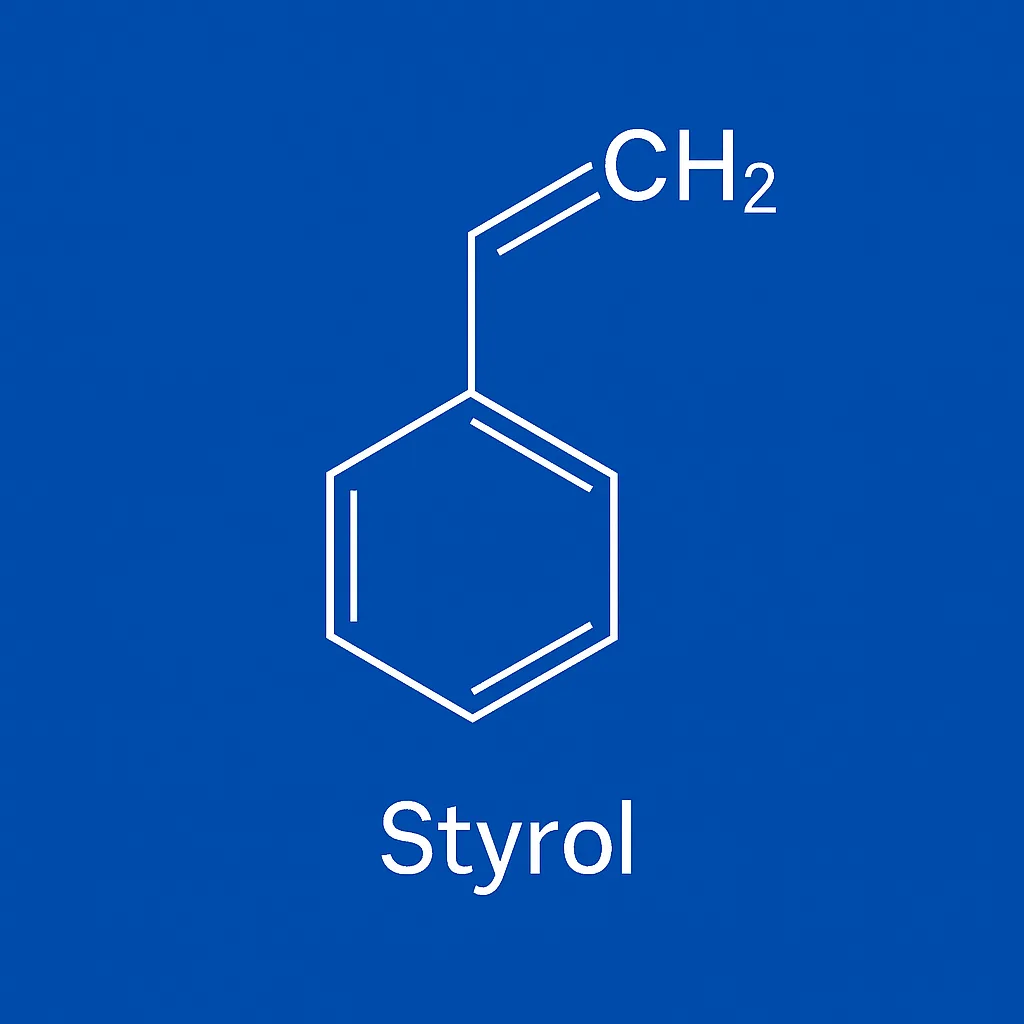
At the end of October, the European Commission published a draft EU regulation on styrene.
Background
The European Commission is planning an amendment to Regulation (EU) No 10/2011 on plastic materials and articles intended to come into contact with food. Affected is the substance styrene (FCM No. 193), which is used, among other things, for the production of polystyrene packaging.
Why the amendment?
- To date, styrene was listed in the Union list without a specific migration limit (SML).
- In 2020, the International Agency for Research on Cancer (IARC) classified styrene as “probably carcinogenic to humans”.
- Subsequently, the Commission mandated EFSA to perform a re-evaluation of the safety of styrene in food contact materials.
Results of the EFSA evaluation
- In its 2020 evaluation, EFSA could not rule out health risks in the event of unrestricted migration.
- In a re-evaluation from 2025, EFSA concluded that there is no evidence of a genotoxic effect upon oral intake.
- The use of styrene is considered safe if migration into food remains below 0.05 mg/kg food.
Planned amendment
In the future, a specific migration limit (SML) of 0.05 mg/kg food is to be introduced for styrene. Manufacturers of plastic packaging must be able to demonstrate compliance with this limit.
Testing requirements
- Compliance with the new limit can be verified through testing in food or food simulants.
- Since testing in simulants can sometimes be significantly over-estimating, non-compliance can generally only be confirmed by testing in the actual foodstuff.
- Particularly fatty foods are considered critical, as higher styrene migration levels can occur there.
Transition periods
- Products compliant under the current legal situation may still be placed on the market for the first time for up to 18 months after the entry into force of the Regulation.
- Thereafter, existing stocks may continue to be sold until exhausted.
- For intermediate products, special labeling requirements apply during the transition period.
Significance for the packaging industry
For manufacturers of polystyrene packaging, the draft primarily means:
- Introduction of a binding migration limit for styrene.
- Establishment or expansion of testing and verification systems.
- Adaptation of declarations of compliance and quality controls.
- 18-month transition period for implementation. (EU draft as PDF)
Conclusion: The EU is not planning a ban on styrene in food contact materials. Instead, a binding limit of 0.05 mg/kg food is being established for the first time in order to increase consumer safety and provide clearer legal regulation for the use of styrene.
If you have any questions, please contact fcm@innoform.de. We would be pleased to provide you with a quote for the specific migration testing of styrene.