Why they are indispensable
Safety and Compliance of Food Packaging
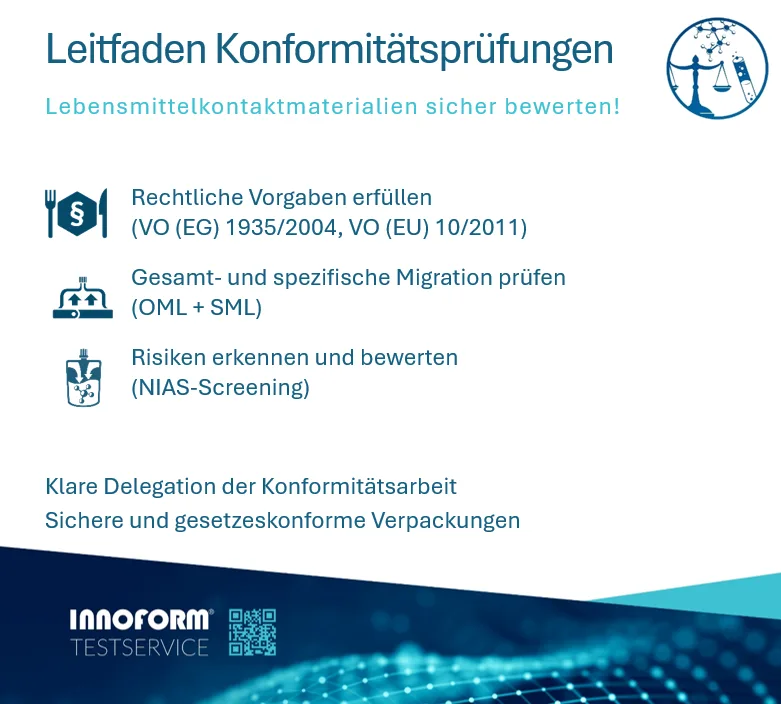
Food contact materials – primarily packaging in this context – are subject to special regulations. They not only serve to protect food, but also influence its safety and quality. But how can it be ensured that these materials comply with strict legal requirements? Our new white paper “Compliance Testing of Food Contact Materials” provides a comprehensive overview of current regulatory requirements, relevant testing procedures and practical solutions for users of food contact materials as well as manufacturers and processors in the packaging industry.
Why is legal compliance of food contact materials so important?
Food contact materials are materials that come or could come into contact with food. This includes packaging, machine components as well as cutlery and tableware. Compliance with legal requirements is not only crucial for food safety, but also for the legal certainty and competitiveness of companies. EU Regulation (EC) No. 1935/2004 stipulates that food contact materials must not transfer components to food in quantities that:
- endanger human health,
- impermissibly change the composition of food or
- impair their odor, taste or appearance.
Which tests are required?
The type of tests required depends on the materials used, the manufacturing process and the intended use. Our white paper explains in detail:
- Overall migration testing: Ensuring that no impermissible amounts of substances transfer to the food.
- Specific migration tests: Proof that individual, potentially concerning substances remain below legal limits.
- Sensory tests: Testing for changes in odor, taste and appearance.
- Risk assessments: Identification of potential hazards from contaminants or degradation products.
Regulatory Requirements and Challenges
In addition to EU Regulation (EC) No. 1935/2004, numerous other legal requirements apply, such as the Plastics Regulation (EU) No. 10/2011 or the GMP Regulation (EC) No. 2023/2006. National regulations and individual measures for specific materials, such as metals, printing inks or recycled plastics, must also be observed.
Particularly challenging is the proof of compliance in complex supply chains, which is typically based on declarations of compliance from suppliers. However, these documents alone are not sufficient – careful plausibility checks and, if necessary, own tests are required to minimize regulatory risks.
Benefits of our White Paper for Your Company
Our white paper provides valuable information for all companies working with food contact materials, especially in the packaging industry:
- Legal certainty: Avoid liability risks and ensure compliance with all relevant regulations.
- Quality management: Optimize your internal processes for compliance assessment.
- Market advantages: Documented compliance strengthens the trust of customers and business partners.
- Practical solutions: Concrete recommendations for action and checklists for implementation in your company.
Request now for free!
Don’t miss the opportunity to expand your knowledge about compliance testing and make your company more legally secure. Request our free white paper “Compliance Testing of Food Contact Materials” now and benefit from well-founded expertise and practical tips directly from our laboratory in Oldenburg.
Request your personal copy directly from our test service
Or also feel free to request the guide directly from Heike Schwertke by phone at 0441 94986 14