
Permeation
Permeation, Tightness, Barrier Properties
We measure the permeation of oxygen, water vapor and other gases through films, papers and complete packages – precisely, in accordance with standards and under variable climatic conditions. Thanks to our large measurement capacity and our practice-oriented special measurements, e.g. on components such as valves or closures, we have a broad wealth of experience. Since a tight package is a prerequisite for barrier measurement, we also offer leak testing.

Optimal Permeation Testing Conditions for Your Material
We measure the permeation of oxygen and water vapor – but also of nitrogen and carbon dioxide – through films, laminates, coated papers and fabrics as well as complete packages such as containers, bottles and pouches. Testing is always performed in accordance with standards and under exactly the climatic conditions that are relevant to your real application.
Through numerous special measurements – for example on sealed-in components, opening aids, laser perforations and valves – as well as fundamental investigations into the influence of heat treatment or simple crumpling, we have built up a broad wealth of experience. This results in longer-lasting food products and higher-quality packaging.
How Does Permeation Actually Work?
The permeation of a gas through a material takes place in three consecutive steps. Together, they determine how quickly a substance – e.g. oxygen – penetrates a packaging material and ultimately reaches the product.
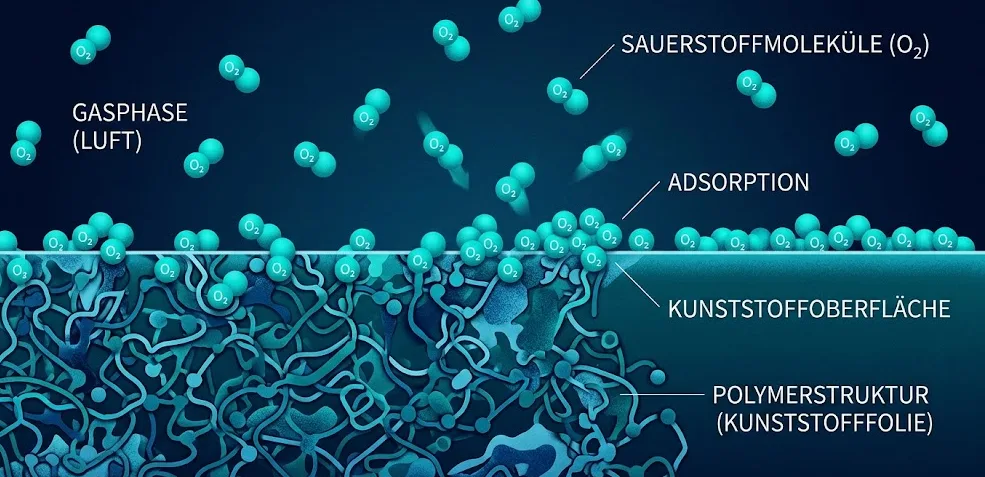
Step 1
Sorption
The foreign molecule – such as oxygen (O₂) or water vapor (H₂O) – hits the surface of the packaging material and is adsorbed there. How much gas is absorbed in this phase depends on the solubility coefficient S of the material.
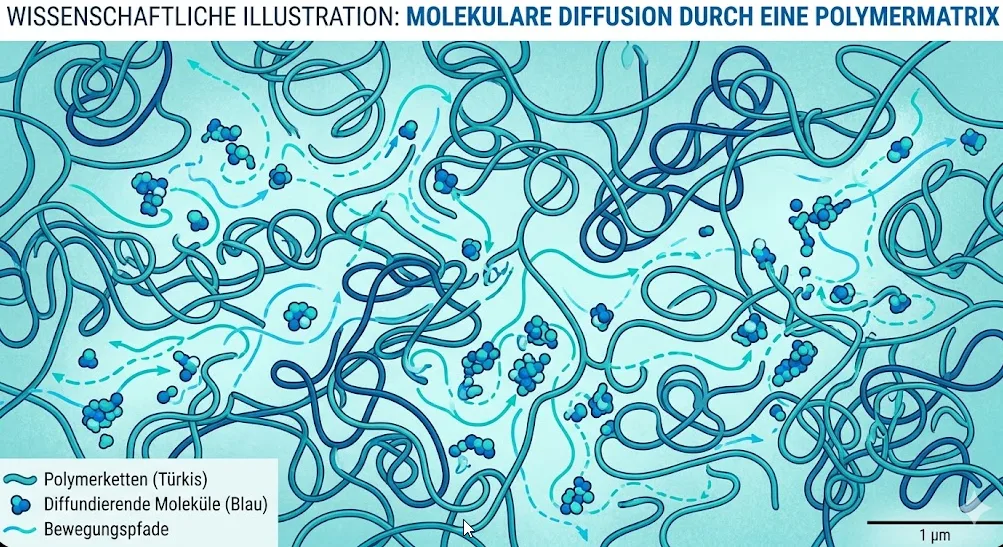
Step 2
Diffusion
The molecule migrates through the material matrix – i.e. through the polymer structure of the film. The distance and speed of this process are determined by the diffusion coefficient D. The denser the matrix, the slower the diffusion.
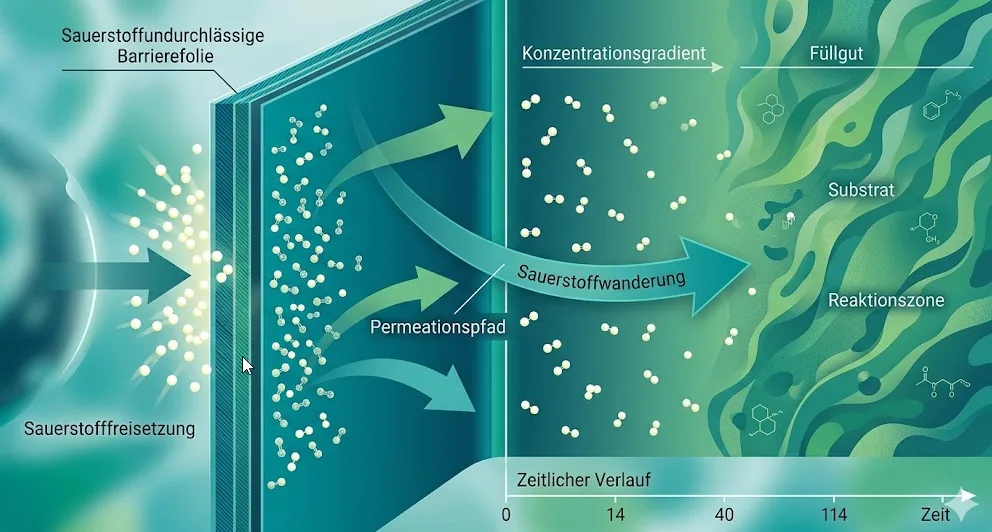
Step 3
Desorption
On the inside of the package, the molecule exits the material again and reaches the product. It is precisely this transition that influences the shelf life of a food product – and which we measure.
P = D × S
Permeation coefficient = Diffusion coefficient × Solubility coefficient
Using the permeation coefficient, precise statements can be made about the tightness of a package.
Note:
The permeation coefficient P is a material-specific parameter.
The values relevant in practice, OTR (Oxygen Transmission Rate) and WVTR (Water Vapour Transmission Rate), are derived from this taking into account the layer thickness, the effective area and the applied partial pressure difference and are therefore test- and application-dependent.
Common Tests and Parameters
We determine the permeation coefficient for a wide variety of substances – whether oxygen, water vapor, nitrogen or carbon dioxide. Depending on the application and storage conditions, we select the appropriate climate and method.
Oxygen Permeation on Films, Laminates & Papers
For films, laminates, coated papers and aluminum composite films, we typically test under the following conditions:
Standard
23 °C / 50 % r.h.
Standard testing in normal room climate.
Humid
23 °C / 75 % r.h.
For packaging of moisture-containing products.
Dry
23 °C / 0 % r.h.
For dry products, e.g. powders or granules.
Special Climate
Individual
Based on your actual storage or transport conditions.
OTR on Finished Packages, Pouches, Bottles & Molded Parts
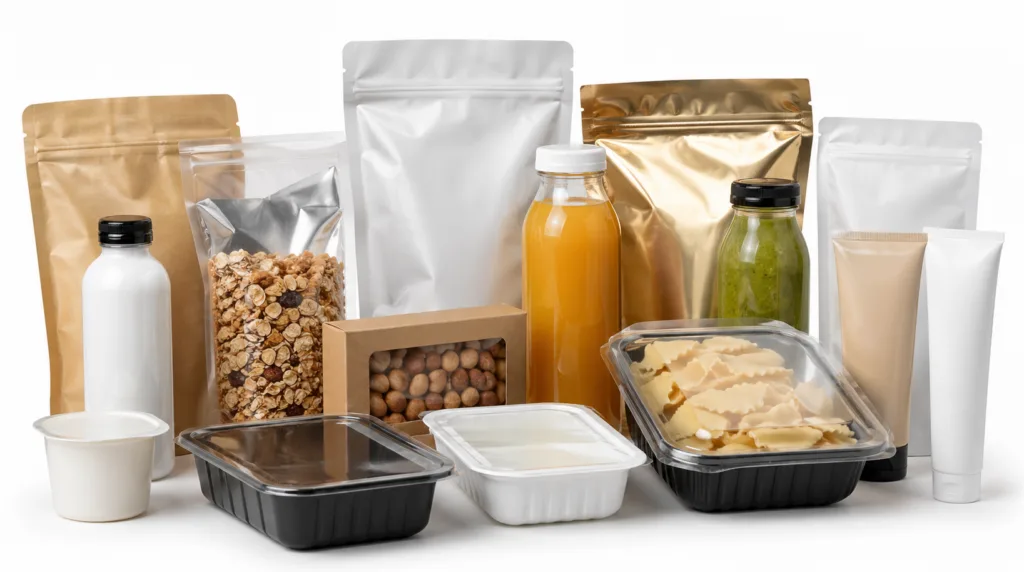
The oxygen transmission rate (OTR) of a finished package is determined under realistic storage conditions:
- Room storage: 23 °C / 50 % r.h.
- Refrigerator: 5 °C / 50 % r.h.
- Tropical climate: 38 °C inside / 50 % r.h. inside / 85 % outside
For carbon dioxide and nitrogen permeation, a manometric method is used.
Water Vapor Transmission Rate (WVTR)
We test the WVTR (water vapour transmission rate) in two clearly defined standard climates – suitable for European or tropical applications:
European Standard
23 °C / 85 % r.h.
Standard conditions, as typically prevail in Central Europe.
Tropical Standard
38 °C / 90 % r.h.
Stress conditions for export and tropical markets.
Free Tool
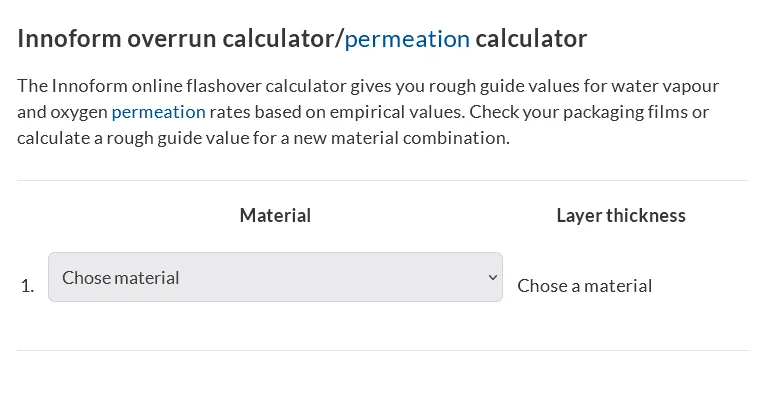
The Permeation Calculator from Innoform
Do you want to quickly know how your film structure affects oxygen and water vapor barrier? Simply enter materials and layer thicknesses one after the other – and you will immediately receive an estimated result for the OTR and the WVTR, the two most important parameters for food packaging.
If you have any questions or suggestions, please contact our expert team.
Your contact person

Matthias Böhne
+49 441 94986-11
matthias.boehne@innoform.de
Top Tests in This Area
Prüfmethodensuche
Oxygen transmission rate (OTR) of plastic films, laminates, coated papers, Alufoils, etc.
permeationWater vapour transmission rate (WVTR) plastic films, laminates, coated papers and aluminium foils
permeation- permeation
- permeation
Tightness, leakage test/pores/micro-holes/defects
permeationCarbondioxyde transmission (CO2 TR) rate of plastic films, laminates, coated papers, Alufoils, etc.
permeation- permeation
Determination of (residual) oxygen and carbon dioxide content in ready-made packages
permeationNitrogen transmission rate (N2 TR) of plastic films, laminates, coated papers, alufoils etc.
permeationWater vapour transmission rate (WVTR), gravimetric test
permeation