
Material Analysis
Material identification of flexible packaging materials such as plastics, papers, foreign bodies and multilayer films
Here you will find individual methods and combinations for identifying plastic packaging, films, papers and coatings of so-called composites, defects (e.g. specks) or contamination. We determine the number of layers, layer thickness distribution, material type and, if required, fillers and additives. The depth of investigation and cost involved depend on the specific requirements.

Insights down to the smallest detail: Material analysis
The material properties of plastic films and food packaging largely determine their performance. To optimize these, verify compliance with specification values or assess damage, precise material testing is essential.
We analyze in detail for you how the material is structured and from which raw materials it was manufactured. From simple layer thickness distribution of multilayer films to in-depth determination of fillers and additives, we adapt the depth of investigation individually to your requirements.
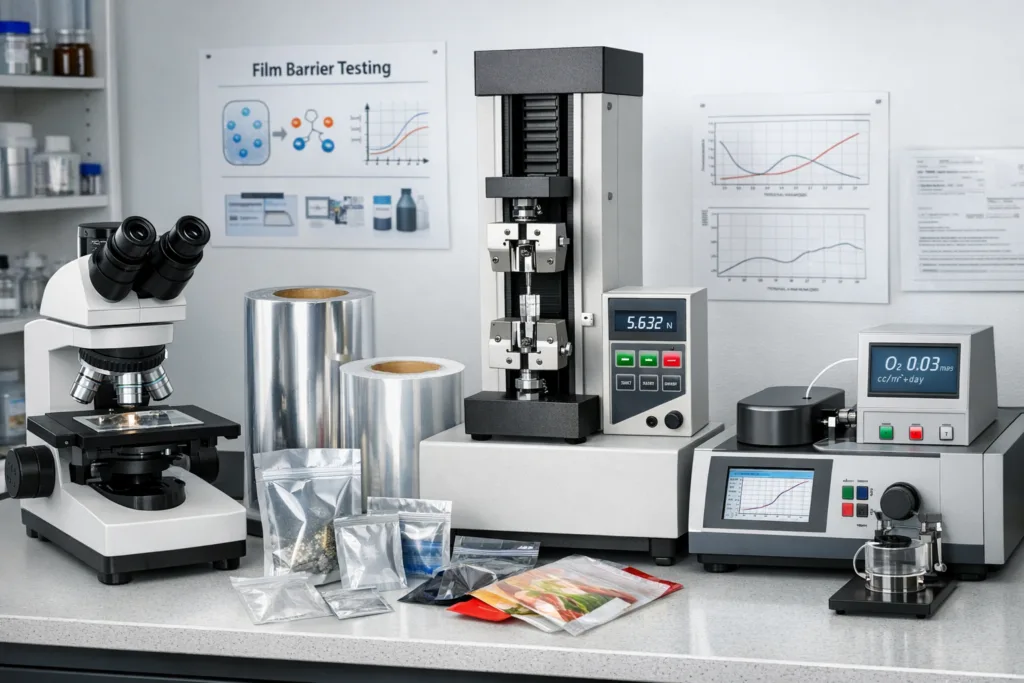
Our core methods for material characterization
We offer a variety of useful methods and method combinations for identifying materials, film structures and contamination. Here are the most important methods at a glance:
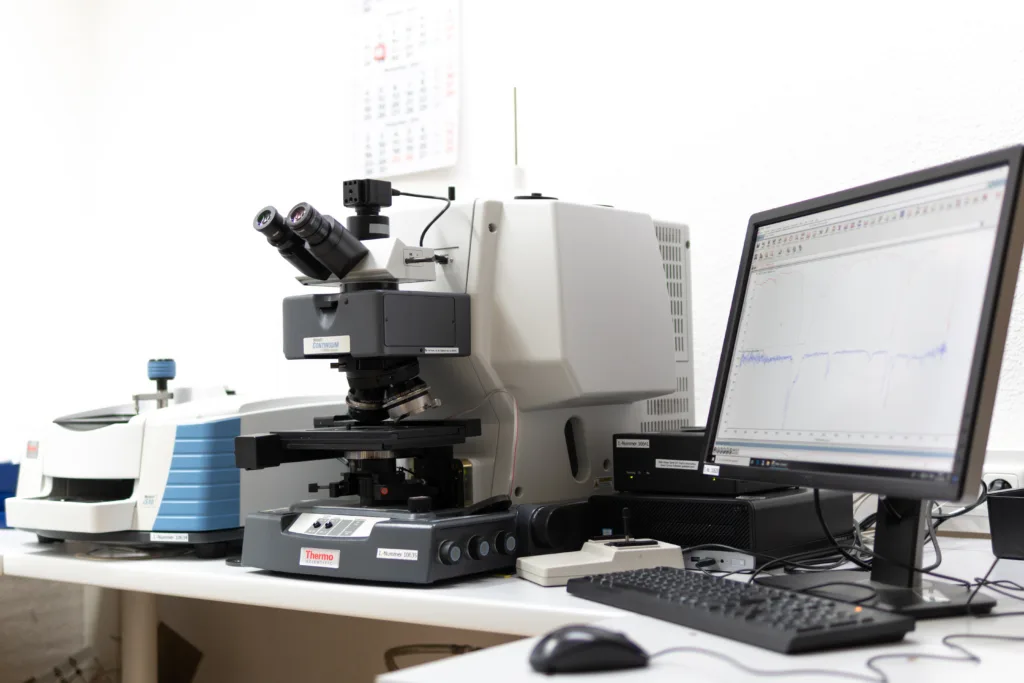
FTIR Spectroscopy
With infrared spectroscopy we determine quickly and precisely the chemical composition of polymers, coatings and contamination. It is the standard method for plastic identification.
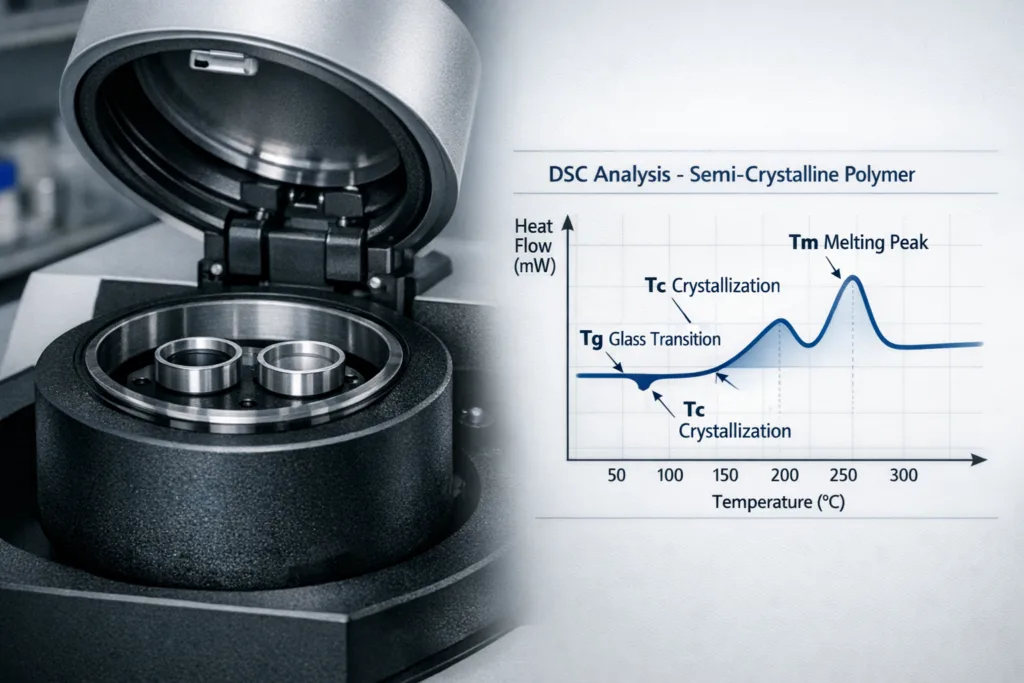
DSC Analysis (Differential Scanning Calorimetry)
Thermal analysis for determining characteristic properties such as melting temperature, crystallinity and glass transition temperature. Perfect for distinguishing similar polymers.
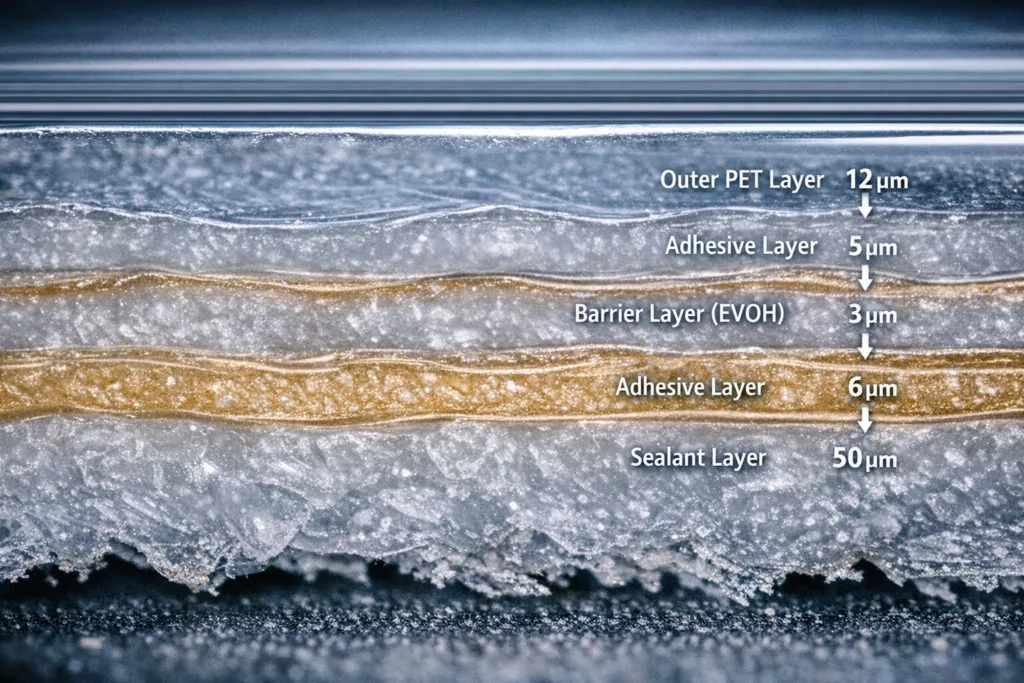
Digital Film Microscopy
By means of microtome sectioning and transmitted light microscopy (often referred to as thermomicroscopy) we make the layer structure of multilayer composites visible and measure precisely the layer thickness distribution of individual layers.
Additional specific tests
Density Determination
Determination of the physical density of plastics, crucial for quality control and material identification.
Beilstein Test
A proven rapid test for detecting halogens such as chlorine, particularly important for PVC-containing materials.
Individual Consultation
Speak with our experts
The field of material testing includes many different tests that offer great potential for improving composite materials and food packaging. Please feel free to call us – we will be happy to advise you free of charge by telephone on the right test selection.
Your contact person

Matthias Böhne
+49 441 94986-11
matthias.boehne@innoform.de
Top tests in this area
Prüfmethodensuche
Microtome section/ cross-sectional image
Material analysisFilm construction/material characterisation – Analysis package at a fixed price
Material analysisDSC/thermal analysis: melting and crystallisation behaviour
Material analysis- Material analysis
Analysis of particles (microplastic, metal particles, minerally particles, glass, etc.)
Material analysis- Material analysis
Melt index (melt – mass flow rate) MFR (MFI)
Material analysisVerification of a given material specification
Material analysisMicroscopic examination with light microscopy, photographic documentation included
Material analysisGC-MS analysis, semiquantitative
Material analysis